

Balogun, et. al. (2025)
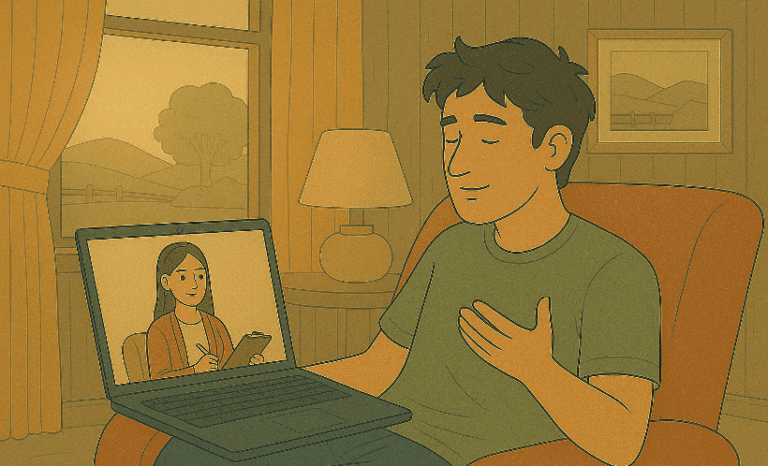
Telehealth is a great tool to reach out to clients. Telehealth bridges the gap between social workers and clients who may be separated by distance, limited access to transportation, or physical challenges. What surprised me most while reading the article was the innovative use of virtual reality (VR) and augmented reality (AR) as tools for immersive training. These technologies create lifelike scenarios that help social workers learn about different cultures and improve their ability to handle emergencies, all while practicing in a safe and controlled setting. I found myself wishing that Georgia State could offer this kind of hands-on, experiential learning, even though I realize it may be financially difficult. These trainings could build a bridge between classroom learning and professional application. It shows that these reality tools “allow students to safely and repeatedly practice with immediate guidance and feedback as a scaffold to prepare for more complex and real community environments” (Lanzieri, N., McAlpin, E., Shilane, D., & Samelson, H., 2021). This will allow students to practice complex interactions with real-time feedback and guidance before stepping into real-world situations.
Telehealth increases access to healthcare by breaking down structural and financial barriers, such as lack of transportation, childcare responsibilities, and time missed from work. In my experience working with refugee resettlements, many clients, particularly those from minority ethnic groups, do not speak English. It is often difficult to find someone locally who can speak their language. With telehealth, however, we can connect with interpreters from anywhere in the world, making it much easier to provide the support these clients need.
I wish the article had gone deeper into the struggles faced by people who cannot access telehealth and how these struggles impact their well-being. While some community initiatives work with tech companies to provide affordable internet access and digital skills workshops for vulnerable groups, many older adults and others in the community I worked with don’t know how to use phones or can’t read. As a result, even with new resources, many are still unable to benefit from telehealth services.
One of the biggest challenges with telehealth is that, while it’s convenient for most people, it can be difficult for those who can’t read or write. For example, I worked with a client who needed to complete a DFCS phone interview. The DFCS never called as scheduled. Days later, the client received a letter saying they missed the interview and was given a phone number to call and reschedule. However, this client didn’t speak English and couldn’t read the letter. When they went to the DFCS office for help, staff refused to assist, insisting the client had to call on their own. This situation highlights how telehealth and some systems can unintentionally exclude those with limited literacy or language skills.
Zhu, et. al. (2024)
I was surprised to learn that a survey from March to May 2019 found only 14.7% of telemental health providers served more than half of their clients through telemedicine. It makes me wonder if this low number was due to insurance companies not wanting to pay for telehealth, or if it was because many clients simply didn’t have access to the necessary technology.
Before the pandemic, I was surprised by how little telemental health was being used. I assumed more providers would have adopted it, especially since so many people already had internet access even before COVID began.
There were differences in how practitioners viewed the future use of telemedicine, influenced by two key factors. First, advantage of telemental health is its ability to reach patients who does not have access to care, especially in rural areas where both mental health services are often limited. The willingness of rural providers to adopt telemedicine highlights its importance in expanding healthcare access. Second, practitioners who planned to continue telemedicine after the pandemic were more likely to serve patients who paid out-of-pocket. This preference is likely due to the convenience and speed of direct payments, which avoid the challenges of dealing with health insurance and invoicing.
Telehealth is a great tool to reach out to clients. Telehealth bridges the gap between social workers and clients who may be separated by distance, limited access to transportation, or physical challenges.
Source
Kafayat Balogun, A., Dada, S., Kazeem, O., & Abiola Bakare-Adesokan, K. (2025). Integrating telehealth services in social work practice for vulnerable groups. World Journal of Advanced Research and Reviews, 25(1), 1984–1991. https://doi.org/10.30574/wjarr.2025.25.1.0248
Lanzieri, N., McAlpin, E., Shilane, D., & Samelson, H. (2021). Virtual Reality: An Immersive Tool for Social Work Students to Interact with Community Environments. Clinical social work journal, 49(2), 207–219. https://doi.org/10.1007/s10615-021-00803-1
You brought forward such important reflection about telehealth, especially the way it can both expand access and unintentionally create new barriers. I really appreciate how you highlighted the role of VR and AR in social work education. Those immersive tools truly have the potential to transform how students prepare for real world practice. I also wish that more universities had the funding to integrate these technologies. They would give students a safe space to practice cultural humility, crisis response, and complex interpersonal skills before stepping into the field.
Your example from the refugee resettlement work really underscores why telehealth matters. Being able to connect with interpreters across the world is a game changer for clients who speak fewer common languages. It removes the geographic limitations that often leave minority ethnic groups without adequate support. That’s a powerful reminder that telehealth isn’t just convenient.
At the same time, you’re right that the article could have gone deeper into the experiences of people who can’t access telehealth. Digital literacy, reading ability, and comfort with technology are often overlooked. Your DFCS example is heartbreaking but unfortunately common. Systems that rely heavily on phone or online communication often assume a level of literacy, language proficiency, and technological skill that many clients simply don’t have. When agencies refuse to assist in person, it creates a form of structural exclusion that telehealth alone can’t fix.
Cho,
I too was impressed and somewhat surprised by the use of VR tools, but then I am older than all of you. I think there is work being done at the school to try and incorporate a number of ways to give you more realistic experiences to understand what practice is like in real like. it might not be VR, but there are other technologies that can be helpful.
I am also amazed at the tools we have at our fingertips related to translations of languages and understanding other cultures. I am hoping that can make a difference in so many different ways.
In terms of your comments about digging deeper on the challenges of access, remember that this is a literature review. What the authors were trying to do was to give the readers a picture of the state of technology use by the profession at that moment in time.
Relating to the Zhu article, I think in our profession the surprise was that people were using it as much as they were, rather than the opposite. We have had a belief in our profession that person to person contact was essential in order to develop a strong, therapeutic relationship between social worker and client. I believe we are learning that isn’t always the case.
Good discussion.
Dr P