
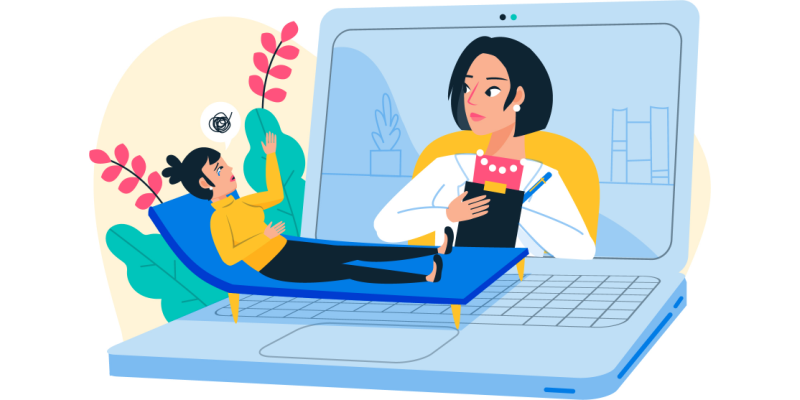

One of the most surprising things discussed in Balogun et al. (2025) was the use of telehealth as a safety tool for survivors of domestic violence. I had never considered how virtual services could provide a safer way for clients to access support. The same idea applies to individuals struggling with substance use disorders. Because there is still stigma surrounding mental health treatment, telehealth can allow clients to receive services privately without worrying about judgment from others (Balogun et al., 2025).
I agree with many of the benefits of telehealth discussed. Eliminating transportation costs and travel time can make services much more accessible, especially for low-income clients. Telehealth also benefits individuals with disabilities, chronic illnesses, or weakened immune systems who may have difficulty leaving their homes (Balogun et al., 2025). However, I do not necessarily view cultural barriers as a telehealth issue because many of these barriers already exist in traditional in-person services. In some cases, telehealth may simply make these issues more noticeable. In my opinion, digital literacy is the greatest challenge because some clients may struggle to learn or retain the skills needed to use technology independently.
The findings in Zhu et al. (2024) also surprised me. Before the pandemic, only 17% of providers reported using telemedicine daily, which was much lower than I expected. I assumed virtual services would have been more common because the technology already existed. I was also surprised that telehealth use during COVID-19 was not higher, considering that many in-person services were limited (Zhu et al., 2024).
Two factors that influenced whether practitioners planned to continue using telemedicine were geographic location and insurance reimbursement. Providers in rural areas were more likely to continue using telehealth because it increased access to care for clients who live far from services. Reliable insurance reimbursement also encouraged providers to continue offering telehealth services because it made virtual services financially sustainable (Zhu et al., 2024).
In my own practice, I would offer telehealth to clients who prefer that option. Although I prefer face-to-face interactions and believe body language helps assess clients more effectively, I understand that some individuals may feel more comfortable expressing themselves virtually. Because of this, I believe both in-person and telehealth services have an important place in social work practice.
Balogun, A. K., Dada, S. N., Kazeem, O., & Bakare-Adesokan, K. A. (2025). Integrating telehealth services in social work practice for vulnerable groups. World Journal of Advanced Research and Reviews, 25(1), 1984-1991. https://doi.org/10.30574/wjarr.2025.25.1.0248
Zhu, D., Paige, S. R., Slone, H., Gutierrez, A., Lutzky, C., Hedriana, H., Barrera, J. F., Ong, T., & Bunnell, B. E. (2024). Exploring telemental health practice before, during, and after the COVID-19 pandemic. Journal of telemedicine and telecare, 30(1), 72–78. https://doi.org/10.1177/1357633X211025943
When you bring up clients who suffer from substance abuse and domestic violence, you have a point. Do you believe that would be ineffective in that situation? What would happen if a client got into an intense fight with their partner either prior to or following their virtual encounter with their provider? How is it possible for the provider to actually supply the resources at that precise moment? On the other hand, the client might be able to communicate to their provider that they are truly in a dangerous situation and are terrified to return home if they were to visit an office. You make a really good point! I agree that, given the severity of my client’s circumstances, I would use telehealth services on a case-by-case basis.
Hi Melina! You make excellent points about the domestic violence survivors and telehealth sometimes being the safest option for them, that is something that stood out to me in the text as well. Your point about telehealth providing privacy to clients struggling with substance abuse was also thoughtful, in my work in the addiction field this fear of judgement is often a barrier for clients. Although that is something that instead of providing them different options to accommodate their worry, I often challenge their own belief systems around their own shame but I think this is something I could consider in the future.
I agree with your point about telehealth being used as a safety tool, especially for survivors of domestic violence. I also had not initially considered how virtual services could create a safer space for clients who may not be able to access in-person support without risk. Your connection to substance use disorders is also important because it highlights how privacy and reduced stigma can influence whether someone seeks help.
I also think your discussion of accessibility is strong, especially regarding transportation, disability, and chronic illness. These are very real barriers that telehealth can help reduce. I also agree with your point about digital literacy being a major challenge because even when services are available, they are not helpful if clients cannot confidently use the technology.
Your observation about the lower-than-expected telehealth usage in Zhu et al. (2024) is interesting as well. It really shows how quickly the shift to telehealth happened during COVID-19 and how practice patterns may not have been as widespread before the pandemic as many people assume.
Melina,
I too was surprised about the DV reference in the article. I think it is important to recognize that this privacy argument only works if the abuser is out of the house, right? But I do think that DV survivors probably feel more comfortable, at least initially, making contact remotely. And remote services do alleviate some of the barriers you mention.
I thought your push back on cultural questions was interesting. I agree that these differences are present no matter what the service delivery medium. I think the authors were suggesting that the technology hasn’t caught up to that issue yet – translations, interpreters, etc.
Telementalhealth was really much more rare prior to the pandemic than we probably remember, since it is much more common today. And continuation of telehealth was partly related to need, but also related to reimbursement.
Good discussion.
Dr P