
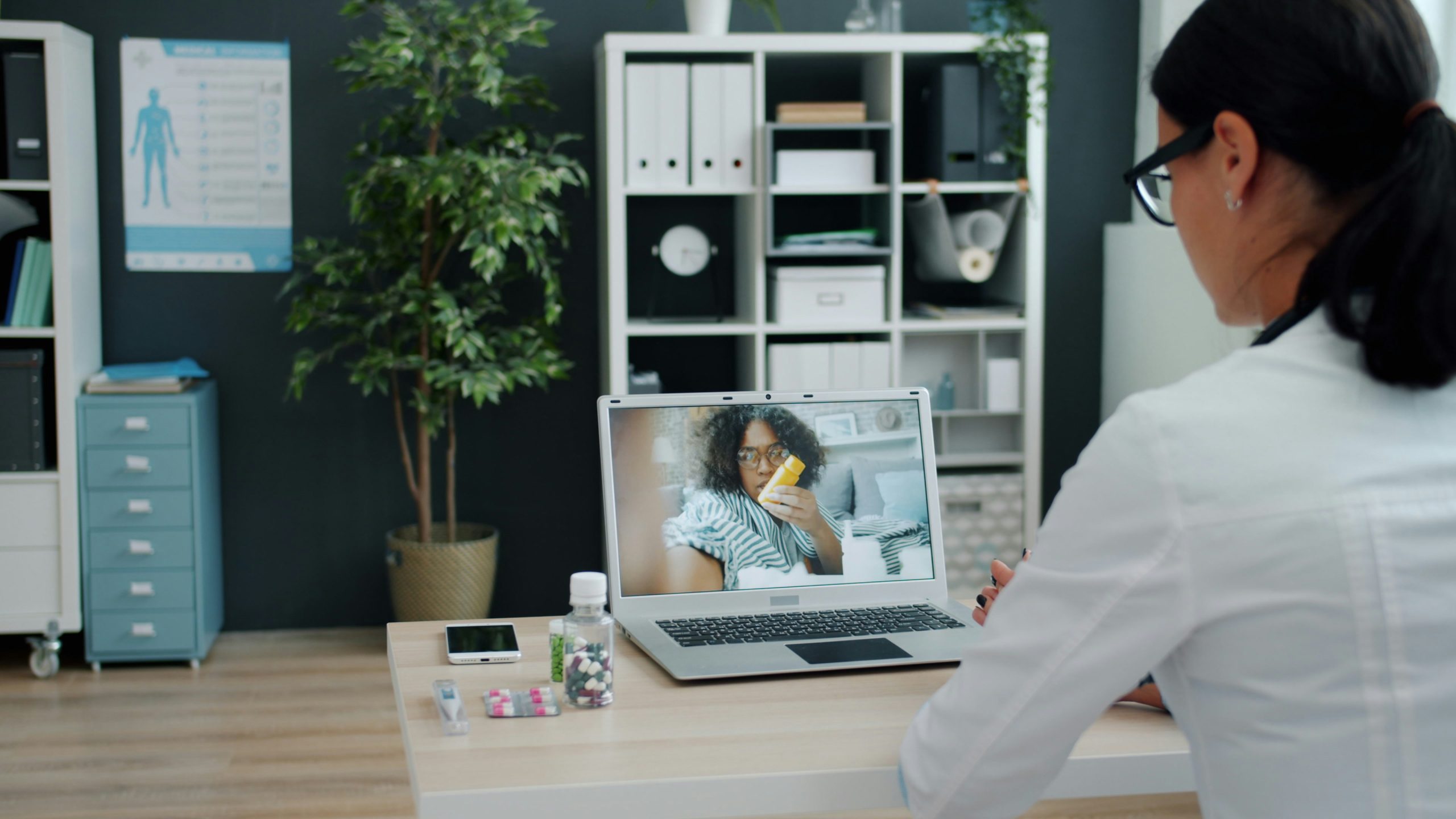

Due to social distancing and quarantine measures during the COVID-19 pandemic, social workers, along with other mental health care providers, turned to technology to provide remote telehealth to continue to provide services. Balogun et. al. (2025) describe several different telehealth services. Most were ones I was familiar with; however, in the article, they mention the use of screen readers and voice-to-text to accommodate clients with disabilities. While I am familiar with screen readers, as I use a similar technology known as text-to-speech (TTS) readers for my academic reading, I never thought of how clients who needed written information and screen-readers aloud could benefit from these accommodations in telehealth.
Another use that was surprising to me was not one that the authors stated was currently being used at the time of the study, but was mentioned as a potential future application. This was the use of AI chatbots to provide care and services to “provide immediate support to clients in crisis until a professional is available” (Balogun et. al., 2025, pp. 1988). This was surprising to me because I have read a great deal of discourse on using AI chatbots in mental health applications, and the discussion is always focused on the dangers of using AI chatbots in such a way. I do see the potential positive usage for it, especially due to the shortage of mental healthcare professionals, as it could reduce lengthy appointment scheduling. However, I do not think that we have advanced the technology in this area to the point where this particular usage is safe for mental health. Balogun, et. al. (2025), lists several vulnerable populations who could benefit from telehealth, including “low-income individuals, rural residents, people with disabilities, and ethnic minorities”. All of these populations have hurdles, such as a lack of or difficulty in transportation, getting time off or work, procuring childcare, or cultural stigmas surrounding mental health, that can often prevent them from accessing the services they need. In many cases, telehealth effectively and successfully addresses these barriers and makes access to services more accessible and equitable.
Balogun, et. al. (2025) discusses many examples of telehealth technology, but one emerging example that I find interesting is the gamification of mental health via video games and apps. Platforms like Hero’s Journey Club host small group therapy sessions, led by a mental health professional, while playing video games, in an effort to destigmatize mental healthcare in a fun and creative way. The CEO and co-founder of the platform states that 70 percent of the users of the service are from marginalized communities, including LGBTQ+ and neurodivergent, and that the platform, which allows anonymity, allows people to obtain access to mental health support in a way that feels accessible and safe (Lovett, 2023). The full article can be found here. In my option the most significant challenge in regard to telehealth is one of the challenges it tries to address, which is accessibility and equity. This lack of equity in technological access is known as the digital divide. Without adequate access to the technology and knowledge needed for telehealth services, many populations who may be best served by telehealth will not have access to these services (Balogun, 2025)
For telehealth to be effective, in addition to clients, practitioners also need to be knowledgeable and comfortable with its use. According to Zhu, et. al., during the pandemic, practitioners were “resilient” to the restrictions on face-to-face due to quarantine mandates and embraced virtual telehealth services. Their study showed that the number of practitioners who used telehealth services daily increased from 17% to 41% and the number of practitioners the used telehealth for the majority of their clients rose from just under 15% to almost 56%, showing a williness and a commitment their clients to continue to provide services during the pandemic’s lockdown, which did not suprise me as all helping professionals rallied during this time. However, the rates were surprising to me. I was not surprised by the relatively low rates of telehealth use before the pandemic, as even in my own personal memory, I do not remember such services being widely utilized.
However, I did expect the number of providers utilizing telehealth for the majority of their clients to be higher. Zhu, et. al. (2025) identified some characteristics that indicate variation in the use of telehealth. One such variation was the title of the professional. Social workers, as well as psychologists, were less likely to expect to use telehealth services. I can see this being the case with social workers, who I would think would be more adherent to traditional face-to-face services. The comfort level of the provider in providing telehealth services was also a factor in usage variation. Practitioners who felt knowledgeable and comfortable using telehealth services were more likely to use it (Zhu, et. al., 2025). I think that these findings highlight the importance of technology education in social work education and practice.
My personal feeling about using telehealth in my practice is a positive one. I believe that when used ethically, responsibly, and with the proper education and training, the benefits far outweigh the risks. I believe that equitable access to services is paramount, as making sure that marginalized populations have access to social services and mental health services should be one of the profession’s main focuses. Telehealth can effectively help individuals overcome barriers and bridge the gap between the client and the provider.
References
Balogun, A. K., Dada, S. N., Kazeem, O., & Bakare-Adesokan, K. A. (2025). Integrating telehealth services in social work practice for vulnerable groups. World Journal of Advanced Research and Reviews, 25(1), 1984-1991. https://doi.org/10.30574/wjarr.2025.25.1.0248
Lovett, L. (2023, October 27). Video Game Mental Health Startup Hero Journey Club Lands $14.6M. Behavioral Health Business. https://bhbusiness.com/2023/10/27/video-game-mental-health-startup-hero-journey-club-lands-14-6m/
Zhu, D., Paige, S. R., Slone, H., Gutierrez, A., Lutzky, C., Hedriana, H., Barrera, J. F., Ong, T., & Bunnell, B. E. (2024). Exploring telemental health practice before, during, and after the COVID-19 pandemic. Journal of telemedicine and telecare, 30(1), 72–78. https://doi.org/10.1177/1357633X211025943
Hello Dmjames, great post! When implemented in practice, it can be a highly positive and transformative tool, especially when used ethically and responsibly. By leveraging technology, telehealth enables mental health and social work professionals to reach clients who might face obstacles to receiving care, such as geographic distance, mobility issues, or a lack of local resources. Not only does telehealth help individuals overcome logistical and physical barriers, but it also provides flexible scheduling options and can reduce the stigma sometimes associated with seeking support in person. In my case, I was surprised by the relatively low rates of telehealth use before the pandemic, because many people already had access to technology, but I guess it could be due to strict legal restrictions and a lack of insurance reimbursement.
Destiny,
It is interesting that screen readers have so many more uses than we tend to consider. We have been working at GSU to make sure our online classes are accessible to folks who live with disabilities. One of the important things is the difficult screen readers have with PDF files. It have been a bit of a dilemma for folks like me in classes like this.
I heard from several of you that utilizing games in therapy seemed like a really useful approach from your perspecitve, and there is some initial literature that suggests you are correct. But I am also interested in how gaming and therapy seem logical to you all, but AI chatbots not so much. As we go through the semester, we will talk about those (in fact you had some of that in the most recent Perusall discussion). I suspect we have reactions based on what is familiar to us, right?
For many of us, telehealth and telementalhealth was the ONLY option, so comfortable or not, you had to learn to be comfortable. I also think that the differences for social workers could have been related to the type of work they were doing. I didn’t see a breakdown in the analysis based on setting. That could have made a difference in choices. If safety were an issue for a client, mose social workers figured out how to manage fact to fact contact. I spent many an afternoon driving from home to home of my low income older adults to help them (on their front porches) figure out their technology so they could get connected.
Good discussion and I appreciate your sharing your opinions and ideas.
Dr P