
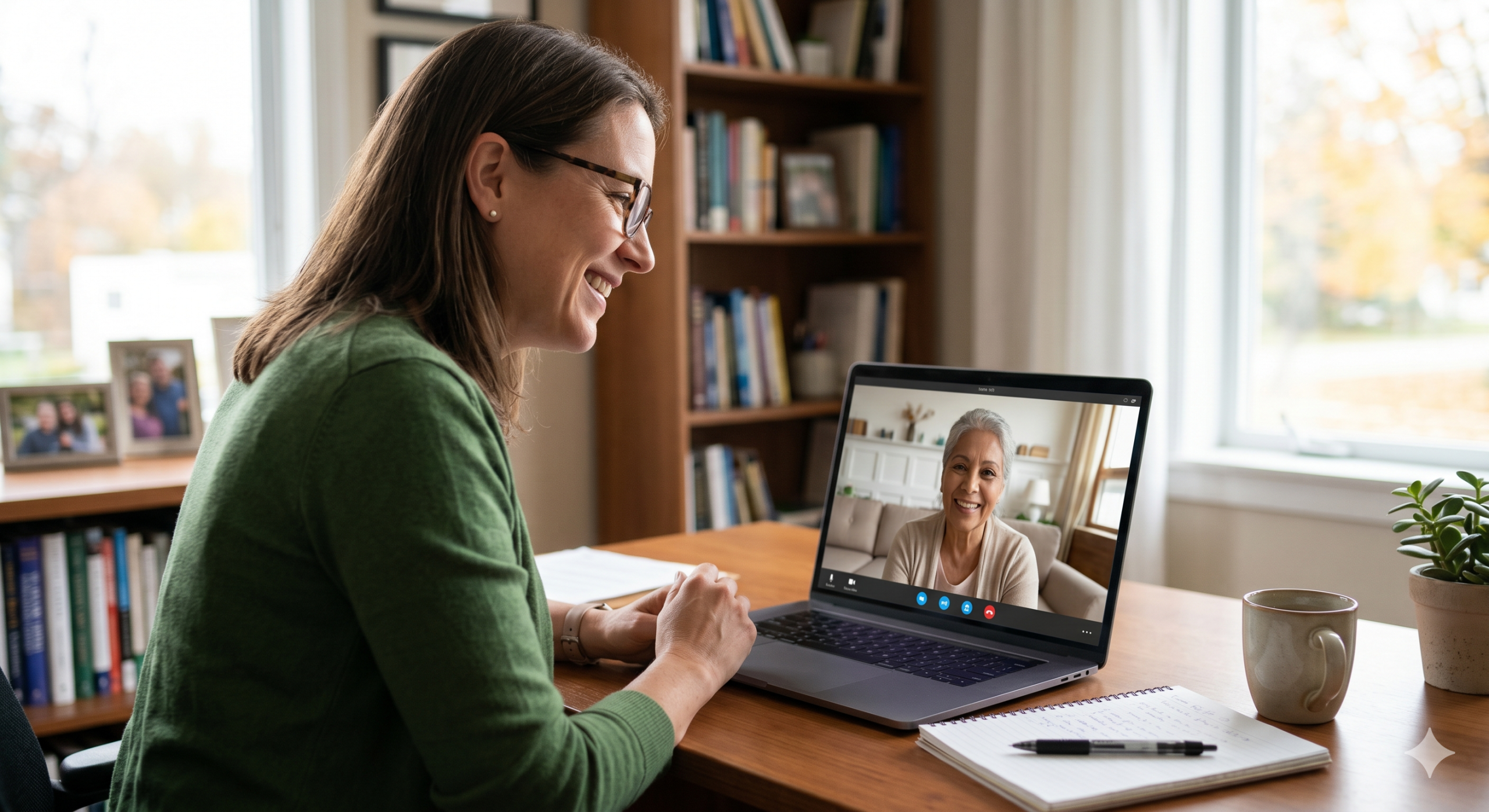

For all the devastation COVID-19 left behind, it also gave us a powerful reminder: when the chips are down, we can pull off massive leaps in a short amount of time. I’m not just talking about the lightning speed of vaccine development that helped us get our lives back. We had to rethink how we did… well, *everything*. How we shopped, learned, and even handled simple family get-togethers. Along the way, telehealth morphed from a niche, cost-saving perk into a mainstream, viable way to manage our healthcare.
Because of that shift, the telehealth landscapes described in Balogun et al. (2025) and Zhu et al. (2024) didn’t exactly shock me. A global crisis turned an underused tool into a healthcare staple, especially for mental health.
Balogun et al. do a fantastic job breaking down the broad benefits of telehealth. But I have to admit, their focus on crisis response—specifically for domestic violence—surprised me. Looking back, though, it makes perfect sense. I’ve always thought telehealth’s biggest draw was offering a safe, stigma-free option for folks seeking mental health, substance use, or safety net services. What I hadn’t fully considered is how telehealth bypasses one of the biggest barriers for domestic violence survivors: the very real fear of being seen walking into a service organization.
When it comes to the challenges the authors raise, the digital divide is absolutely the biggest one. We saw some attempts to fix these infrastructure issues through recent federal legislation, but we also saw how quickly political shifts can threaten that progress. As social workers, we need to constantly advocate for rural broadband expansion and programs that keep digital care affordable and accessible.
Zhu et al. give us more of a provider’s perspective, and honestly, their findings lined up with what I expected. It all comes back to adapting when there’s no other choice. During a pandemic that pushed humanity to its breaking point, practitioners had to use whatever tools were available to keep supporting their patients. Speaking from my own mental health journey, I just can’t imagine a helping professional rejecting a viable solution and leaving their clients without care.
Out of all the reasons providers gave for continuing to use telemedicine, two really stood out: client preference and reimbursement.
* Client preference was the top reason, which is exactly how it should be. If we’re going to practice ethically as a helping profession, meeting the client where they are—and how they want to engage—has to come first.
* Reimbursement was the second biggest factor. It’s a tough reality check about the state of our healthcare system. Until we decide to invest more in our people than in warfare and overfunded corporations, we have to work with the system we’ve got. This is a huge area for advocacy: if we have to play in the private insurance sandbox, we need to make sure those companies aren’t arbitrarily making decisions that rightfully belong to our clients.
One thing neither article mentioned—which I think is a glaring omission—is the potential for fraud. Almost every industry that goes digital spawns an underworld of scams offering fake or substandard services. Why would telehealth be any different? Scammers target the vulnerable, so it’s only a matter of time before this becomes a major issue (if it isn’t already).
Personally, I’m a huge advocate for expanding telehealth. We need schools teaching it as a core skill, policies expanding broadband regardless of zip code, and a system that reminds insurance companies they aren’t the experts on our clients’ lives—our clients are. My own experience with teletherapy led to the most productive therapeutic relationship I’ve ever had. My therapist and I connected in a way that let him guide me exactly as I needed. If I hesitated or dodged an issue, he’d catch it immediately and say, “Jerry, why are you trying to BS me? Let’s try again, and whatever you’re avoiding, we’ll face together.” He helped me process some serious trauma, and that telehealth format gave me the exact safe space I needed to do the work.
Jerry,
Your first paragraph definitely spoke to me, as I was working with older adults at the time and that is exactly how I felt. And your summary of their discussion of DV surviviors was right on the mark. Of course, the abuser has to be out of the house, right? But that is really their point.
We were faced with the decision of new forms of care or no care. Your points are well taken. But when we have choices, it should come down to where the client is. That, to me, is the client preference argument. But I do believe that sometimes the benefit to the client is affected by our attitudes and our abilities.
I will admit that I didn’t think about the fraud angle. It is true that technology can make fraud easier by vifture of all the same characteristics that make it a positive. I think that will probably become even more important as we talk about the integration of AI into this conversation.
Thank you for sharing your personal experience with remote therapy. I happen to believe that the issue is always relationship and skills – and we should be able to develop both of those no matter what medium we use to provide the service.
Good discussion. Thank you.
Dr P