
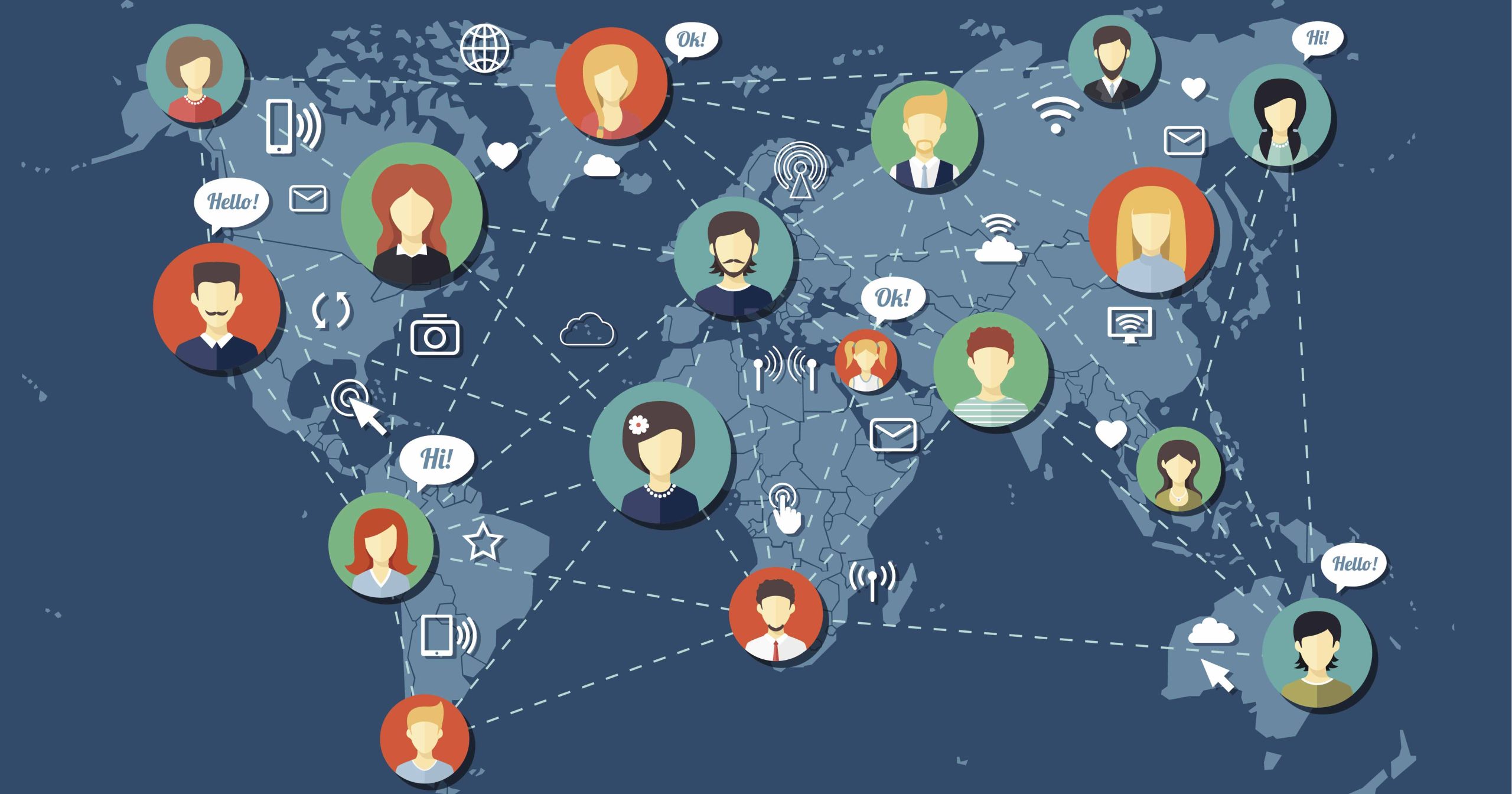

Telehealth was once a scarcely used service that practitioners were wary about implementing into their practice, but the COVID-19 pandemic created a high demand for these services, and the demand has not gone away. This week, we read an article by Balogun, et al, 2025 which discussed what telehealth services are and who they can benefit or deter. We also read a study conducted by Zhu et al., which evaluates how the pandemic changed the game for telemental health, and what may come after the pandemic effects wear off. In this blog, I will discuss what I read, and my thoughts while reading. You will also find that I did a little more digging on how telehealth works for a certain vulnerable population, and found a relevant study that I thought others may enjoy reading!
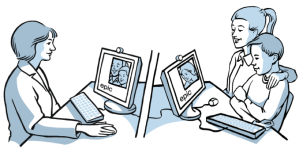 Types of Telehealth Services:
Balogun, et al, 2025 discusses how telehealth can be a transformative tool that specifically addresses accessibility and equity to vulnerable populations. They discuss multiple ways that telehealth can be utilized such as:
- Mental Health Services – therapy & counseling
- Crisis Intervention – hotlines & chat-based platforms (allows immediate access to social workers)
- Chronic Illness Management
- Social Support and Community Building – virtual support groups
- Tailored Interventions – culturally adapted services
- Discreet Access for Vulnerable Groups
I feel as though the authors were very thorough in identifying types of telehealth services. I can add another instance that I have seen used in my field work which is telehealth assessments. I have specifically seen this be used in CPS cases where parents or children need to be assessed for various things in order to create an effective case plan. Having the ability to connect them with a licensed professional via telehealth helps mitigate barriers like transportation or lack of time to do a longer commute.
Access for Vulnerable Populations:
Balogun, et al, 2025, describes how telehealth helps vulnerable populations overcome barriers that they face with traditional social services. They specifically speak about low-income individuals, people with disabilities, and people from ethnic minorities. They make strong arguments on how telehealth allows service implementation to be flexible to the needs of these populations.
People with Disabilities
In the discussion of how telehealth impacts people with disabilities, they highlight that telehealth can eliminate the need for in-person appointments which may make accessibility better for this population. They also quote Edirippulige et al. (2016) by sharing that adaptive technologies can be used with this population. While I agree that these technologies are useful, I believe that adaptive technologies like speech to text tools and screen readers would be things that people with disabilities may need to benefit from telehealth services. If these populations were attending in-person appointments, they may not need the tools. I will add that a technology tool that may be useful for this population as well is access to ASL interpreters via video calls. I have seen these technologies used for in-person services. Would this be considered telehealth?
I read another scholarly article published in 2020 by Valdez et al., 2020. While this article may be a bit outdated since technology moves so quickly, I do think that they make good points. Valdez et al., 2020 share concern that the COVID-19 pandemic’s influence on a speedy integration of telehealth services may leave people with disabilities behind. They go over a whole list of considerations that need to be priorities to ensure that this population is not losing access versus gaining. One point that that I thought was very relevant is that the disabled population is a great part of the “digital divide”. Balogun, et al, 2025 also discusses the digital divide and how lack of broadband access and updated technology can create major barriers to the access that telehealth potentially gives.
Ethnic Minorities
I did find the discussion of telehealth’s benefits to people from ethnic minorities to be a great point. Telehealth platforms that are able to be used in multiple languages, interpret in real time, and provide resources that are culturally sensitive can truly benefit these populations and offer social services that are incomparable to in-person services for non-English speaking clients (Balogun, et al., 2025).
Domestic Violence Survivors
Balogun et al., 2025 even mentions how survivors of domestic violence can benefit from telehealth services because they can access resources discreetly which is a life-saving option.
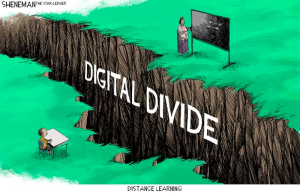 The Digital Divide
I still believe that the biggest barrier to telehealth services being a largely accepted and positively impactful innovation, is the digital divide. Balogun describes the digital divide as a “technological disparity” due to lack of access and lack of knowledge about technology and telehealth platforms.
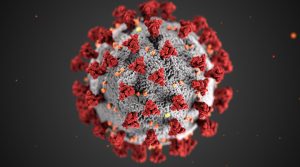
COVID-19 & Its impact on Telemental health
The COVID-19 pandemic created a necessity for social distancing. The fear and unknown of how the virus spread or how to stop the spread led the world to separate from their social circles and daily lives. With this era of social distancing, came an immediate issue. How can people still receive or begin to receive mental healthcare? Mental Health practitioners had to quickly develop telehealth programs. According to the reading from Zhu et al., 2024, prior to the pandemic, 75% of mental health practitioners were treating only 25% of their caseload via telehealth. The response of the pandemic shifted this statistic to cause practitioners to more than double their daily use of telemedicine.
According to Zhu, et al. (2024), “Providers daily telemedicine use more than doubled from 17.1 % -40.6 % during the pandemic. Likewise, providers ‘ telemedicine caseload significantly increased after the onset of the pandemic, x² ( 1, N = 175 ) = 3.99, p < 0.05. About 9.1 % ( n = 16 ) of providers reported serving more than half of their caseload via telemedicine prior to the pandemic, whereas 57.7 % ( n = 101 ) of providers reported providing telemental health services to more than half of their caseload during the pandemic” (pg. 5).
These statistics did not surprise me when I read them. The COVID-19 pandemic was a world-wide phenomenon, and people had to find a way to keep living their lives. Adaptation was necessary, especially by those who work in the helping field. Not only did practitioners need to find ways to make sure that their clients received services, but they also needed to continue working to sustain their own survival as well.
The Aftermath…
Zhu, et al. (2024) reported that during their study, practitioners were asked about their plans after the COVID-19 pandemic ended. Surprisingly, or not so surprisingly, there were a lot of practitioners who stated that they would continue serving their clients via telehealth methods primarily. These practitioners were identified to be mental health counselors, providers serving rural populations, and providers whose primary income source is self-pay. I find it logical that providers serving rural populations would continue serving their clients via telehealth because of the convenience of better accessibility. Clients can save time and money on transportation costs that they would have to incur if they returned to in-person. Self-Pay providers can more easily serve their clients via telehealth because they do not have to worry about the insurance process. In this study, telemental health providers who do take insurance said that they would use telemental health more frequently with their clients if they had reimbursement specialists helping them coordinate insurance claims (Zhu, et al. 2024).
My Personal Thoughts
After reading and studying these articles about telehealth this week, I have formulated an opinion that telehealth services are a great option to have, so that clients can be reached more easily and less populations are going underserved. I do however, think that there will always need to be checks and balances completed to ensure that ALL populations are being served to the best of providers capabilities. It is the job of social workers to identify any gaps in services and help formulate plans to resolve these gaps. I am a big proponent of trying new things because the world and technology is constantly progressing. I feel as though we must keep up with these new technologies in order to best serve our clients.
References:
Balogun, A. K., Dada, S. N., Kazeem, O., & Bakare-Adesokan, K. A. (2025). Integrating telehealth services in Social Work Practice for vulnerable groups. World Journal of Advanced Research and Reviews, 25(1), 1984–1991. https://doi.org/10.30574/wjarr.2025.25.1.0248
Valdez, R. S., Rogers, C. C., Claypool, H., Trieshmann, L., Frye, O., Wellbeloved-Stone, C., & Kushalnagar, P. (2020, November 18). Ensuring full participation of people with disabilities in an era of telehealth. Journal of the American Medical Informatics Association : JAMIA. https://pmc.ncbi.nlm.nih.gov/articles/PMC7717308/
Zhu, D., Paige, S. R., Slone, H., Gutierrez, A., Lutzky, C., Hedriana, H., Barrera, J. F., Ong, T., & Bunnell, B. E. (2024). Exploring telemental health practice before, during, and after the COVID-19 pandemic. Journal of Telemedicine and Telecare, 30(1), 72–78. https://doi.org/10.1177/1357633X211025943
This was a great read and very great visual. I do think that COVID-19 boosted the use of telehealth. Providers had to meet clients where they were to provide the best care possible. In social work, there is no one-size-fits-all approach. In my opinion telehealth has been a breakthrough.
Hi Emily!
I was very impressed by your post! I agree with you stance that telehealth is a great option to have. Being able to assist underserved groups and communities is extremely necessary to thrive within this profession. I was also not surprised by the continued use of telehealth after the pandemic. Myself I have even found it convenient and much more flexible as availability is better. As you mentioned, I believe working past the digital divide should be the next step to ensure more accessible services.
Thank you so much for your insight post!
Hello Emily!
First, I want to give you some much-deserved kudos for your blog post. The visuals and organization are very appealing.
I also agree with your personal thoughts on Telehealth services in social work. There is a fine line that must be walked to allow broader access to services while simultaneously upholding social work ethics and core values. I fear there is much room for error and unethical behavior, but I also know through this week’s readings that Telehealth can assist individuals in connecting with support when in-person is not an option. Technological innovation has opened the door for social workers to meet clients where they are and intervene where they may not have been able to prior. COVID-19 aided in the rapid integration of Telehealth services, and I am interested to see the lasting impacts it will have on our profession. Thank you for sharing!
Emily,
This is a good and complete summary and analysis of these articles. Your visuals are a nice addition and add fun to the whole process. We are going to be reading some material from the University of Minnesota Center for the Advanced Study of Child Welfare regarding the use of technology in child welfare services. I think you will find them interesting.
I agree that the digital divide is one of the most important issues as we work to create the best technology-mediated practice possible. I would also suggest that this divide is at the core of our history as a profession and has been our struggle for economic justice from the beginning. I suspect we kn ow just have to add technology access to that fight.
Dr P