

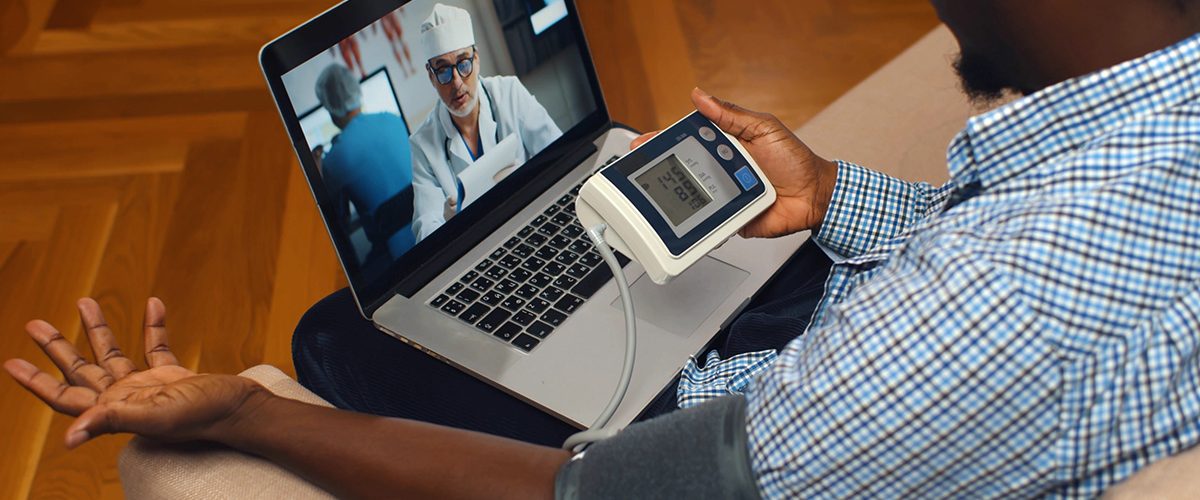
The integration of health monitoring systems at home alongside telehealth as improved health outcomes for many patients in a wide variety of care needs.
For the most part, the areas of telehealth discussed in Balogun’s article coincided with my expectations. However, one area of telehealth that they discussed which was revelatory to me was the additional support that it can provide to clients suffering from domestic violence or substance abuse. I had never considered that these vulnerable populations may forgo seeking help for want of quasi-anonymity.
I was also surprised to learn that there were barriers to the provision of telehealth caused by licensing restrictions. Up until now, I actually assumed that being licensed would let you operate anywhere in the country as a social worker. I do wish they had been more specific when describing client region and cross-border work. I presume they’re speaking about state borders and not international ones, but the vagueness in wording muddles the meaning sufficiently to where I’m unsure about which it is.
Overall I agree with the discussion they had about telehealth and vulnerable populations. The benefits and barriers to service delivery for vulnerable communities were both addressed adequately. The authors explained how telehealth helps to overcome some barriers, such as transportation and scheduling, while acknowledging that a substantial portion of low-income households (21%) lack access to the broadband internet and devices necessary for such services (Balogun et al., p1986).
I would have liked it if they had discussed some of the potential harms and risks that come with using AI-chatbots. While the authors only indicate it as an option to provide “immediate support to clients in crisis until a professional is available” (Balogun et al., p1988), this may introduce a tool that a client would not have considered using without professional recommendation. Considering that “chatbots would often validate delusions and encourage dangerous behavior, (Gardner, 2025)” it seems problematic to me to include it as a viable option in a discussion about technology and social work practice without including some acknowledgement about the risk and potential need for oversight.
An interesting challenge that hadn’t occurred to me was that “underfunded social service organizations often struggle to afford these systems, leaving gaps in [data] security measures.” (Balogun et al., p1986) It would be wonderful to see some non-profits or grant programs come about to address the gap between practitioner data security service coverage and funding requirements.
I find it surprising that there was a portion of providers who became less comfortable with using telemedicine after the onset of the pandemic. Some drop-off might have been anticipated, but 25% becoming less comfortable was a much higher number than I would have anticipated. I wonder, did they begin to feel that some patients were not receiving the same quality of care? Were they exacerbated by technology or software? I think focusing on that particular shift in sentiment could help to demonstrate issues we should be paying particular attention to and taking measures to safeguard against or correct for.
The use of telemental health services increased less substantially during the pandemic than what I expected it to, but not by much. Most of the data demonstrated in the article coincided with the assumptions I had made.
The two factors regarding the continued use of telemedicine that piqued my interest most were the issue of rural vs. urban/suburban regions, and self pay vs. public insurance. I can understand why a rural practitioner would be more inclined towards its continued use with patients that have connectivity available – in rural areas, it can be both financially expensive and time intensive to attend appointments. Practitioners likely experienced the benefit of telehealth services provided to their patients and want to continue to provide that option to them. Inversely, in areas where such concerns are not as likely to cause barriers to access, I can understand why a practitioner may still prefer in-person appointments whenever feasible for the clients. Non-verbal communication has long been a tool utilized by such practitioners, and a common sentiment seems to be that the additional communication layers available in-person are preferable over telehealth when feasible.
I also find it interesting that self-pay indicates a greater willingness to consider continued use of telehealth services over public insurance/salary reimbursement. I presume that this is a practical consideration on the financial side of their office administration, as we often find that services – and their costs – will differ between self pay and other insurance forms amidst a wide range of practitioners. Considering that 75% of the respondents indicated a sentiment that public insurance was the most reliable reimbursement method (Zhu et al, p5), I find this distinction to be an odd one – even accounting for administrative considerations. I wonder why that is?
I’m not sure that I’m experienced enough to have a considered or nuanced opinion on the matter, as I haven’t performed enough practice to have a strong preference one way or another. As an immuno-compromised person myself, I think I’d lean more towards telehealth over in-person. But – ultimately I’m at the service of my client, and would utilize the method they most found preferable (as appropriate).
This video discusses the lack of healthcare access in rural parts of America, and how provider care shortages in these areas make geographically large portions of America more vulnerable to health crisis – particularly in the winter months. This entry into their documentary series follows Newman and other doctors at Sanford Health, where providers meet with patients sometimes hundreds of miles away from them by using telehealth services. The introduction and expansion of such services have increased overall access to both primary care doctors and specialists in their region.
References
Gardner, S. (2025, December 3). Experts Caution Against Using AI Chatbots for Emotional Support. Teachers College – Columbia University; Teachers College, Columbia University. https://www.tc.columbia.edu/articles/2025/december/experts-caution-against-using-ai-chatbots-for-emotional-support/
Kafayat Balogun, A., Dada, S., Kazeem, O., & Abiola Bakare-Adesokan, K. (2025). Integrating telehealth services in social work practice for vulnerable groups. World Journal of Advanced Research and Reviews, 25(1), 1984–1991. https://doi.org/10.30574/wjarr.2025.25.1.0248
NorTech. (2023). Telehealth and Home. In Nortechsys.com. https://www.nortechsys.com/insights/telehealth-remote-care-and-hospital-at-home-increase-demand-for-iot-devices/
STAT. (2023, November 2). Treating Rural America: The telehealth solution. YouTube. https://www.youtube.com/watch?v=XapgYyRc6Gc
Zhu, D., Paige, S. R., Slone, H., Gutierrez, A., Lutzky, C., Hedriana, H., Barrera, J. F., Ong, T., & Bunnell, B. E. (2021). Exploring telemental health practice before, during, and after the COVID-19 pandemic. Journal of Telemedicine and Telecare, 30(1), 72–78. https://doi.org/10.1177/1357633×211025943
Hi Alice!
I would also like to learn more about the negative aspects of AI chatbots. What I have heard of these chatbots are mostly negative. I would like to learn more about if the creators collaborate with helping professions for this service. I like how you pointed out that the potential harms and risk should be address and I agree with you. Especially since when mostly any individual can access this type of service with the need of a professional recommendation. These negative aspects of these types of AI chatbots makes me question if AI is ready to address mental health topics and if it be so accessible to individuals in crisis. And how do they insure it is helping the individual effectively?
I was surprised to learn that some social service organizations lack the funds to support a secure service like telehealth. I am not sure why I believed that all social service organizations were able to acquire Telemedicine with no cost. It makes me change my perspective that not all social service organizations are equal. Social services interact with funding challenges trying to provide the services for individuals who have barriers for secure social service. It makes me see that community organizations are so important to support secure social services like Telemedicine for the community.
Hi, Alice!
Your point about underfunded agencies struggling to afford secure telehealth systems really stood out to me. It’s true that many nonprofits don’t have the budget for HIPAA-complaint platforms, encrypted storage, or updated cybersecurity tools, even though practitioners are still expected to protect sensitive client information. That gap between what’s required and what agencies can actually afford feels like a major barrier to safe telehealth.
I wanted to share an example from my own experience that connects to your point about underfunded agencies struggling with data security. When I interned at a non-profit free clinic, most of their record-keeping was still on paper, stored in locked file cabinets to maintain privacy. Only recently did they start updating their communication system by adding a HIPAA-compliant text messaging platform. There are some free or low-cost programs available for non-profits, but many of them limit full features unless the agency pays for a subscription. The platform the clinic used offered two years of free service before requiring payment, and because of the clinic’s nonprofit status, they were able to negotiate a reduced rate. It worked for the moment, but it showed me how nonprofits often have to patch together affordable options rather than having consistent funding for secure technology.
Alice,
I am hoping you will be able to read these comments inspite of the image above. I don’t know quite how this happened, but I am working on a fix.
I thought your comments on the Balogun article were right on. I noticed you are suing a date in your parenthetical reference and your bibliographic reference that isn’t correct. The article was published in 2025. The link for the article was confusing, as it included dates from the journal’s history, but this article is from 2025. That already made this material outdated, since much of the literature they reviewed was several years earlier – and it was already somewhat outdated based on the dates of the articles they reviewed. Unfortunately, it was all there was at the time.
There are licensing issues, but they are basically the same as always. If you are serving clients in Georgia, you must be licensed in Georgia. That’s pretty basic no matter what the method of service delivery. They have been working on an inter-state compact, which, as I understand it, has passed but will take some time to implement. Here are links to the Georgia Board of licensure and the compact website.
https://sos.ga.gov/how-to-guide/how-guide-clinical-social-worker
https://swcompact.org/
As you can tell if you look at the materials we will be reading over the semester, you can see we will be spending a significant amount of time talking about AI and chatbots, so no worries. I also think that most organizations and agencies have had no choice but to find the resources for equipment to offer telehealth and telementalhealth services. We will also be reading about burn out issues this week, so it may address some of your questions about why folks changed their mind about using remote services.
Finally, the idea of these blog posts is for you to talk about what was assigned for you to read. There is no expectation that you will add more resources or do more research.
Dr P