

Integrating telehealth services in social work practice for vulnerable groups (Balogun et. al., 2025)
Considering the recent large shift toward virtual services after COVID-19, the presence of telehealth was not entirely unexpected in the reading of Balogun et. al. (2025). The authors of this first article describe telehealth as an effective way to reach vulnerable groups who face barriers like transportation, distance, or limited provider availability. In my undergrad studies, I did a deep dive on digital literacy for older adults which makes the article align with what I already knew about the benefits of telehealth. What did surprise me was the many different roles telehealth can play beyond counseling. The authors mention that telehealth can provide crisis intervention, chronic illness support, and ongoing case management (Balogun et. al., 2025, 3.3). I think, for me, the most surprising was utilizing telehealth to provide chronic illness support. I thought that clients benefited the most by managing their illnesses in-person, where a doctor can see their physical symptoms and monitor health changes with their most updated technology. This made me think of the rise in electronic health devices like the Oura Ring, that provides individuals a way to track their wellness in a more convenient way. This is a life saving change that will benefit many vulnerable populations.
Yes, I agreed with the discussion about the benefits of telehealth for vulnerable populations. Many of the points made by these authors match what we see in real-world social work practice. Telehealth can reduce many barriers that clients face, especially in rural areas. I live in Northwest Georgia, and in areas like these, telehealth can help many in receiving services, At the same time, I liked that the article did not entirely romanticize telehealth. The mention of the digital divide, and the need for improved training is beneficial for these vulnerable populations to maintain an effective use of online services. So while I agreed with the discussion, I also think the benefits only matter if we can address the structural barriers that prevent clients from having reliable access to technology.
While the article discussed many important uses of telehealth, I think it would have been insightful to touch on how we use online services to promote interdisciplinary collaboration within social work. When I interned at a hospice agency, there were interdisciplinary meeting held twice daily which consisted of the social workers, CNAs, the chaplain, and program director. This helped the team regularly monitor all clients from a distance while traveling to attend those same clients. The most significant challenge, in my opinion, is the digital divide. Telehealth is most efficient for people who have access to stable internet, a private space and the skills to use virtual platforms. This is important because it directly affects equity, and telehealth is intended to increase access.
Exploring telemental health practice before, during, and after the COVID-19 pandemic (Zhu et. al., 2024)
One thing that surprised me about the response of the practitioners was how quickly many of them adapted to telehealth and began to view it as a long-term tool to their practice. I thought there would be more hesitation to utilizing virtual platforms, especially from those who were used to doing their practice in-person. COVID-19 became a huge adjustment for us all, so the rate of telemental health was about what I expected. The authors described a significant increase in teleheath during and after COVID, this jump went from 9% to 57%. Mental health care seems to be one of the easiest services to shift online, so it makes sense to me that the comfortability rate skyrocketed.
Practitioners seems more likely to continue using telemedicine when they saw that it genuinely improved access for vulnerable clients. If clients are showing improvements in their treatments and staying connected, I think providers see telemedicine worth keeping. If there is a gap in technology access or digital literacy, then there is little confidence in providing remote services. Another factor that affects the use of telemedicine is the amount of support coming from the healthcare system, which includes factors like reimbursement policies and privacy guidelines. With these supports, telemedicine feels more sustainable.
I feel that telehealth can be a valuable part of social work practice, especially for individuals who face barriers like transportation, mobility issues, or conflicting schedules. In my experience in healthcare, many clients appreciate having flexibility. The use of technology also makes it easier for providers to reach clients and coordinate as much as they need to. Unfortunately, like everything else, telehealth isn’t accessible for all. Telehealth should be carefully integrated into social services, so that we don’t leave vulnerable populations behind.
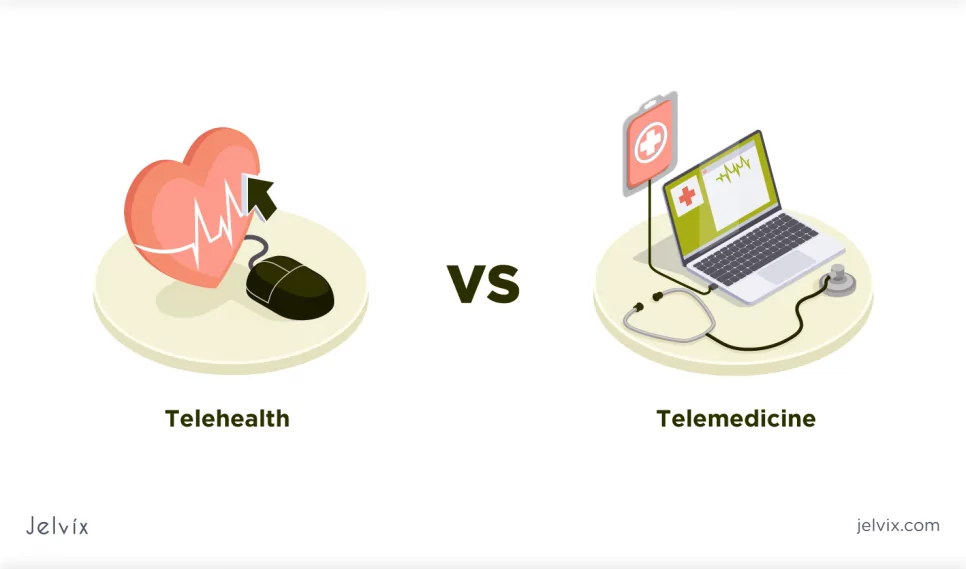
Extra: I have attached the reference for my featured image in the references below. The image comes from an article that details the difference between telehealth and telemedicine. I thought I would share this with you all, if you wanted a concise breakdown that features similar concepts from our articles.
References
Adeseun Kafayat Balogun, Samson Niyi Dada, Oluwatobiloba Kazeem and Kehinde Abiola Bakare-Adesokan. Integrating telehealth services in social work practice for vulnerable groups. World Journal of Advanced Research and Reviews, 2025, 25(1), 1984-1991. Article DOI: https://doi.org/10.30574/wjarr.2025.25.1.0248
Shukla, G. (2025, January 23). Detailed Comparison between Telehealth vs. Telemedicine. Software and Technology Blog – TatvaSoft. https://www.tatvasoft.com/outsourcing/2025/01/telehealth-vs-telemedicine.html
Zhu, D., Paige, S. R., Slone, H., Gutierrez, A., Lutzky, C., Hedriana, H., Barrera, J. F., Ong, T., & Bunnell, B. E. (2021). Exploring telemental health practice before, during, and after the COVID-19 pandemic. Journal of Telemedicine and Telecare, 30(1), 1357633X2110259. https://doi.org/10.1177/1357633×211025943
I found the discussion on illness management through telehealth, particularly for diabetic patients, especially compelling. While there are tools such as wearable devices and smartphone apps that track vital signs and glucose levels, I share your skepticism about whether these technologies can fully substitute for in-person assessments. The ability of practitioners to observe physical symptoms, perform hands-on examinations, and interpret subtle cues remains an essential component of effective care, something that current telehealth technologies, in my view, cannot yet replicate with complete reliability.
The digital divide is indeed alarming, as it encompasses not only digital literacy but also access to necessary devices and reliable internet connections. These barriers can further marginalize populations already facing disadvantages, making it imperative that we address both technological and socioeconomic inequities as we expand telehealth services. The challenge extends beyond simply providing technology; it involves ensuring individuals have the skills and support needed to use these tools to their fullest potential.
Your point about gradually integrating technology into social work is well taken. While slow and thoughtful adoption can help ease the transition, there is an understandable concern that overreliance on technology could erode the human connection that lies at the heart of therapeutic relationships. Striking the right balance between accessibility, technological innovation, and genuine human interaction is a complex but crucial task. We must continually ask ourselves: how can we leverage the benefits of telehealth without sacrificing the depth of care and empathy that clients need?
Kailey,
I am fascinated to learn that you took a “deep dive” on digital literacy and older adults in your undergraduate program. As someone who was leading a nonprofit serving older adults during the pandemic, I would love to hear more about that. I too was impressed by the fact that we were already talking about the varied uses of telehealth services during this period of time. Remember, this is a literature review, so it is trying to give us a pciture of where things were at that point in time – at that moment. And when you talk technology, when you write your first sentence, you are already behind.
Many of the articles these authors reviewed were very realistic about the challenges of telehealth and telementalhealth. I have not had the chance to review your extra article, but I think we also have to include the telementalhealth category in there as well. I think as we go along in the rest of the semester, you will find that all of the same issues that have been true in mental health services (regardless of the medium or method) continue to be true for telehealth and telementalhealth as well.
Good discussion.
Dr P