
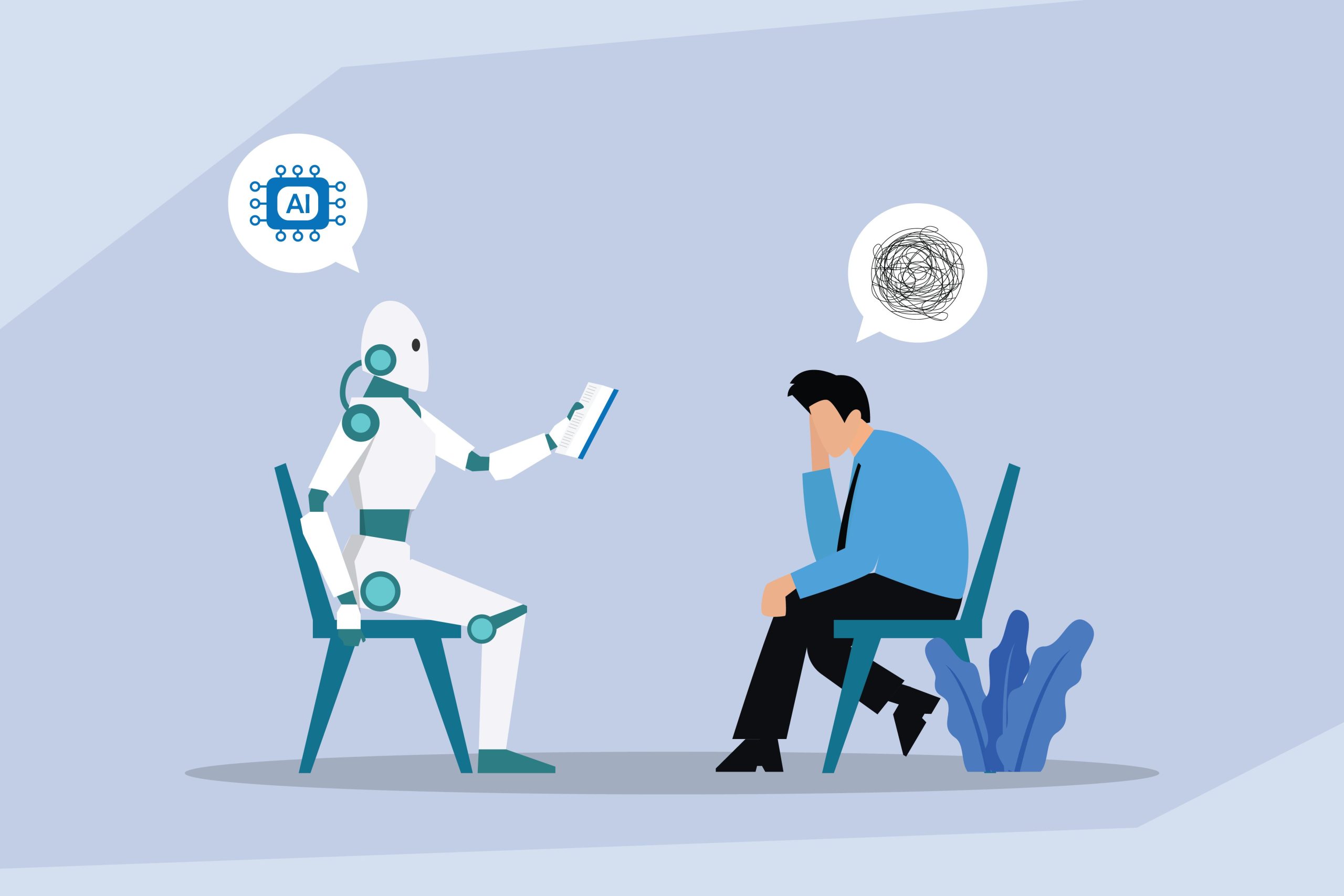

Kalota (2024)
ChatGPT came out when I was in my final year of undergrad, and I had heard of students trying to use it to write papers and assignments for them. I remember many of the professors I had mentioned to us in class that when completing an assignment, refrain from using AI to complete them because they can tell and have tools to check. I was scared to use it because of the cautionary tales of other students, and because of the repercussions that came along with using it. I was not too familiar with AI when it first came out, and did not use it until trends online came out about inputting a certain prompt to ChatGPT to get a picture. I had tried it out then, and in recent years, I have used notebookLM to assist in creating flow charts for different topics discussed in class that I struggled to understand, even when reading materials. I have a better understanding of AI now and try to refrain from using it after learning about the environmental impacts AI has and how AI stores information. I was not familiar with deep learning that ChatGPT uses when first using it to generate images, and after learning about how this tyep of learning “requires a large amount of data for training and prediction” and how it almost mimics the neural structure of the brain (Kalota, 2024), it is in impressive to hear but is also worrying because of how the information I fed it can be stored and used to help the AI interact with others.
When reading about the potential it has to assist people, such as in higher educational settings and in the medical field, it makes me think of AI more positively. Since there is still concern with the security of information, environmental impacts, and the effect on people’s intellectual abilities, I am not fully comfortable with using AI in social work. Client confidentiality and sensitive information are an important part of the work we do, and if I am not 100% sure that a client’s privacy is protected when using AI, I would prefer not to use it in practice.
The way I would try to explain it to them would be that the AI tool that they used is inferring or predicting information to give you based off of its learning process that it used to collect data. The data that the AI found may not be exactly related to what you asked, but based on the patterns it found, it gave you an educated guess. I would also communicate that it is important to check the information it gave you with other professionals, or simple research, so that you are not working with incorrect information.
Moore et al. (2025)
Given the research from this article, I do not feel confident in LLM being used as an alternative form of therapy. If I had to choose a human-oversight point I would insist on to use chatbots, it would be to use an AI that uses supervised machine learning, where the competencies, guidelines, and ethics codes of the professions can be given to the AI to go off of, along with additional training that professionals deem important. Maybe this could be a way to mitigate the stigma that LLM’s use.
I would draw the line at the AI providing any therapeutic intervention or advice to the client. As shown by the results of Moore et al.’s findings, LLM shows stigma and makes harmful or dangerous suggestions to clients when they are experiencing delusions, suicidal ideation, and hallucinations, so this does not give me confidence in using AI in situations where the mental health professional is not present. I think tasks that are suitable for AI in the mental health field would be administrative tasks and data collection. These tools could be used to assist with intaking new clients and assisting with note-taking and documentation.
I think that when human oversight is missing in work settings, assumptions are made and miscommunication happens. Assumptions can be made because of a lack of guidance and information, and can be harmful to the people receiving this communication. The miscommunication can happen because necessary steps are skipped, and then mistakes could be the result of this. Guidance and collaboration are needed in any professional position, whether it be in the form of AI or human-to-human, to avoid mistakes and possibly dangerous outcomes
Hi, I will give you 9/10 for explaining your reason for not being fully comfortable with using AI in social work. As you mentioned, client confidentiality and sensitive information are very important parts of our work, and with all advanced AI, I also don’t think clients’ privacy is fully protected when using it. Do you think there is an acceptable way to use an AI tool in social work practice? such as intake screening,
or waitlist triage?
I don’t think that there is any security measure that will 100% of the time keep clients data secure. There are always flaws and room for error, whether that be in physical security or cybersecurity. I think that we can give 100% effort in securing data by doing thorough research and ensuring safeguards are in place. I understand the concern for data security, but I would hate for you to lose out on utilizing helpful tools because of a fear that there will be a breach, because that is always a possibility no matter what your security system is.
I do agree with you that AI can be positively utilized for administrative tasks and data collection. This would be beneficial as it can make systems more efficient and free up providers’ schedules, thus creating more availability and access for clients. This ultimately could help deter them from using chatbots if there was a local therapist available to them.
Score: 8/10. I think that you made a strong case for being cautious about using AI in social work, and I think that you did a good job discussing AI’s potential benefits. I appreciated that you acknowledged both benefits and risks. I would have been more convinced if you had discussed what level of security or oversight would make you comfortable with using AI in practice.
Hi, I think you did a great job explaining what make your uncomfortable with integrating more AI usage. I believe we at a point that avoiding AI is no longer possible. I wonder what safeguards you think would make the use of AI more acceptable in social work. Do you feel avoiding the use of AI giving therapeutic services should be on an individual level or should regulations be put in place at organizational levels?
Great post! 8/10
Verania,
You have a good start on this material. I realize it is a bit dense, right? I know we like to think we have a choice about using AI that learns through supervised machine learning. However, what Kalota is talking about is a long process of how machine learning has progressed. Here is a summary of the progression discussed by Kalota.
” In semi-technical terms, it is a Chatbot that utilizes AI, NLP, and LLMs to communicate with its audience.” (Kalota, p.8) My point in all this detail is to clarify what is, in many ways, a foreign language to us, and to suggest that, as much as Supervised Machine Learning sounds like a good idea to you and me, we have already moved well beyond that level of machine learning in Generative AI.”
This is hard to totally comprehend, so that is why I have added the How AI learns document to this week’s module.
I think everyone pretty much agrees that AI should not take over clinical work. The question is where the line is and how we set up safeguards so that we protect clients and professionals while still offering quality care.
Dr P