

The environmental impact of AI is something that always complicates my views and feelings towards AI every time I am confronted with it, and reading Kalota (2024) was no exception. According to Kalota (2024), for GPT3 to be trained, it required the same amount of energy to power 120 homes in the U.S for one year. I am used to seeing raw numbers that I know are extremely large amounts, but the fact that these units of measurement are usually not as familiar to me makes it difficult to understand them in practical terms. Kalota’s (2024) comparative example, comparing it to household energy usage, is something that I can visualize and understand better. However, understanding this immense energy usage has increased the complicated feelings I have surrounding AI, especially Gen-AI. Even though I try to limit my Gen-AI usage, I still have found it useful in various situations in my personal life and practicum. I most often use Gen-AI in situations where I need an alternative or more in-depth explanation to understand a topic or for troubleshooting a problem after I have exhausted other options. A year ago, my hot water heater was leaking and flooded my basement. Being that this is the first time I have lived in a house and not an apartment, I was unaware that the problem was, and was attempting to troubleshoot it myself. After over an hour with no luck, I took pictures and ran it through ChatGPT. At the time, I had no idea how much energy and water I used trying to learn how to fix the issue. Even until recently, I thought using text only would keep my energy usage low, but I am now starting to understand, and even more so after reading Kalota (2024), that even these prompts still take a large amount of energy, especially as the models become more advanced. After reading this journal article, I spent time learning which models have the lowest energy usage to keep my impact as low as possible when I do use Gen-AI. Whether or not this makes me more or less comfortable with the use of AI in social work practice is still complicated. I have seen how useful AI, particularly Gen-AI, is to different populations, especially those who are neurodivergent and who struggle with executive functioning, task organization, and communicating effectively in a neurotypical manner. As someone who wants to practice social work in educational settings with neurodivergent populations, I cannot ignore the real-life examples of positive impacts I have seen. However, and conversely, I cannot ignore the extremely negative impacts that it has on our planet, disproportionately so in marginalized communities, including low-income and racial and ethnic minorities, contributing to environmental racism. These are issues we as social workers are called to fight against under the NASW Code of Ethics (Code of Ethics of the National Association of Social Workers, 2024). I think this is a topic whose views will evolve over time, especially as I grow in my social work practice.
If I needed to explain to a client or colleague why Gen-AI “hallucinates,” I would explain that Gen-AI, like ChatGPT, uses, in part, large language models that predict what words will come next, but because it is based on a prediction model, it is not infallible. Also, I would explain to them that Gen-AI is based on the data it receives and cannot verify if this data is accurate or not, so it is always important to double-check any and all important information given by Gen-AI for accuracy (Kalota, 2024).
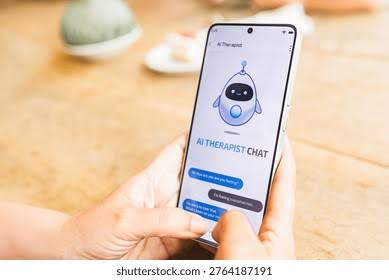
After reading Moore et. al. (2025), I would only feel comfortable with AI use in social work if there was no interaction between the AI chatbot. There are many uses for AI in social work to assist the social worker, for example, drafting notes, preliminary reviews of intake questionnaires, or finding and making personalized resource recommendations. I believe the line of appropriateness stops at the client. When working with a social worker, the client should always have a direct line of interaction with a human and not an AI system. I came to this conclusion due to the troubling findings of Moore et. al. (2025). I was particularly concerned with the rate of inappropriateness of the responses when faced with delusion and suicidal ideation across multiple chatbots, and most concerning to me was that the chatbot Noni, which is a chatbot developed for the purpose of emotional support and is available on an online therapy platform, performed the highest rate of inappropriateness (Moore et. al., 2025). The site offers free peer emotional support and professional therapy online, making it extremely accessible, especially to those who cannot access traditional therapy, making its inappropriate responses even more dangerous (7 Cups | Free Online Mental Health Support; Therapy & Counseling, n.d.). While I understand the motivation behind wanting to solve the issue of filling the gaps in the lack of access to mental health providers, I believe, based on the study by Moore et. al. (2025), that the risks in using AI chatbots far outweigh the benefits due to their inefficiency and the inappropriateness of their responses that can, and have, had serious and dangerous implications for clients.
During my practicum last year, there was a lengthy government shutdown that affected many people’s SNAP benefits. I found that many of my clients were receiving erroneous and misleading information from Google’s AI overview. While attempting to Google questions about their benefits, they were often without understanding, receiving AI responses that were not factual. They would often then come to me telling me what they read, and I would have to assist them in finding the correct information from government websites while also explaining to them that Google now uses AI responses in their general web searches and that many times this information can be wrong or misleading and needs to be verified. Without someone explaining this to them, they would have believed the information they received from Google, which could have had negative outcomes, such as missing out important information on new guidelines and eligibility requirements.
References
7 Cups | Free Online Mental Health Support; Therapy & Counseling. (n.d.). Retrieved July 17, 2026, from https://www.7cups.com/
Code of Ethics of the National Association of Social Workers. (2024). National Association of Social Workers. https://www.socialworkers.org/About/Ethics/Code-of-Ethics/Code-of-Ethics-English#principles
Kalota, F. (2024). A Primer on Generative Artificial Intelligence. Education Sciences, 14(2), 172. https://doi.org/10.3390/educsci14020172
Moore, J., Grabb, D., Agnew, W., Klyman, K., Chancellor, S., Ong, D. C., & Haber, N. (2025). Expressing stigma and inappropriate responses prevent LLMs from safely replacing mental health providers. In Proceedings of the 2025 ACM Conference on Fairness, Accountability, and Transparency (FAccT). https://doi.org/10.1145/3715275.3732039
Hi James, I’m giving you a 10/10 for your clear explanation of how to explain AI “hallucinations” to a client or colleague. You emphasized the importance of double-checking any information provided by AI, which is a crucial point for ensuring accuracy and trust. Your approach is practical and easy to understand. Great job!
I appreciate your concerns, and I agree with you on how to utilize AI in our practice. More specifically, I think that decision-making should be left to the practitioners. The issue is that unless we are giving clients better solutions to the issues that they are addressing with these unreliable chatbots, then they will continue to use them. So the answer cannot simply be “don’t use it”. It has to be “don’t use this… do this instead”.
Score 10/10. I think that you did a great job arguing your position with examples from the reading and your own experience. I also appreciated how you identified appropriate ways that AI can be used as a support for social workers and explained why decision-making shouldn’t be something that AI does for our work.
Hi James,
After reading your post, I have a clear understanding of your perspective on AI and how the reading material provided insight. Your experience made it even more insightful and easier to understand on your standing with AI. I score it 10/10!
Destiny,
The issue of environmental impact is huge, and we need to be strong advocates for ways to mitigate that impact. There is information out there that suggests those impacts can be mitigated, but for companies to invest in those answers, they need policy motivation. That is where we can advocate. I understand the goal of keeping our Gen AI use to a minimum, just like we are careful about water use, recycling, and gardening. All of these things matter. But we also need to utilize the tool sufficiently to understand its basic functions. And if you are serious about working with neurodivergent folks, you are correct: Gen AI will be important. (BTW, pretty much all AI is Gen AI at this point).
We are all advocates for never replacing clinical skills with AI. The more difficult question is where it can be helpful, how do we determine the lines, and how do we create and enforce guardrails?
Dr P