

Kalota
- Before reading Kalota’s article, I had already been using generative AI in several areas of my life without fully understanding how it worked. In my admissions role at an addiction treatment facility, I use it to improve the clarity, language and grammar of professional emails, draft policies, and revise documents. In coursework, I use it to help me breakdown readings and create study guides. Personally, I have used it for everyday questions that frankly I don’t feel comfortable annoying another human being with. Until reading this article, I assumed AI was retrieving accurate information similar to a search engine, I did not realize that it was generating responses by predicting patterns in language rather than knowing or verifying information. Understanding this distinction has now changed the way I evaluate and will use AI.
- This article providing clarity on how generative AI actually makes me equally more comfortable and apprehensive about AI and its role in social work practice. Learning that AI generates responses by recognizing patterns rather than using reasoning or facts has made me less likely to rely on it for important decisions or ethical dilemmas. At the same time, I am more comfortable using it as a tool because I now understand its strengths and limitations. I think it can still help with things like efficiency, so helping social workers draft documentation or policy, develop informational materials like presentations, and organize thoughts. However, I do not believe it should replace professional judgement, especially when clients are making significant life decisions or experiencing a crisis. Understanding how AI works reinforces to me that it should support social workers but not replace the critical thinking, empathy, and clinical judgement that effective practice requires.
- I would explain that AI does not think or fact-check the way that we as humans do. It predicts what words are most likely to come next based on patterns it learned from text. Because it is predicting instead of verifying information, it can sometimes produce answers that sound convincing but are incorrect. Although it’s predictions are correct some of the time, it also makes mistakes. This is why AI can be a helpful tool for generating ideas and organizing information, but should not be used as a source that should automatically be trusted.
Moore
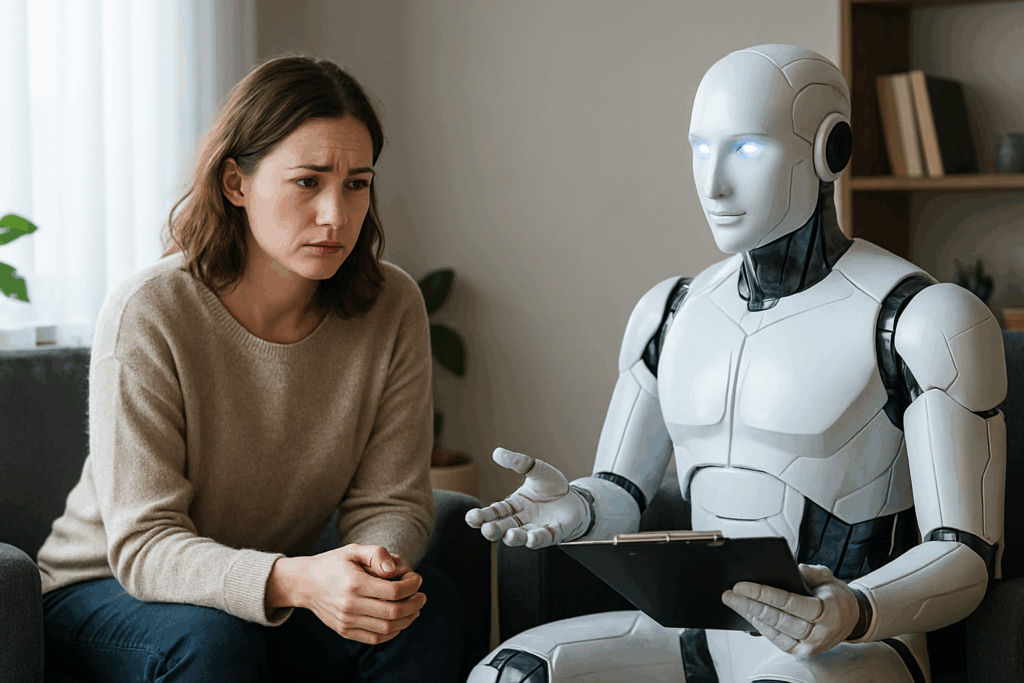
- Even if AI were only being used for lower-stakes tasks, I would want clear protocols requiring it to immediately transfer a client to a human professional if any mention of suicidal thoughts, psychosis, abuse, or any situation suggesting someone may be at risk of harming themselves or someone else. Moore et al.’s findings show that AI can sometimes respond inappropriately or in a way that perpetuates harmful beliefs, so there should never be uncertainty about when a human takes over.
- Moore et. al. helped me draw the line between tasks that require professional judgement and human connection. AI can be appropriate for things like answering common questions, providing resources, helping clients navigate services. or even a mindfulness exercise, however once a conversation requires interpreting emotions, assessing risk, making clinical recommendations, or responding to a crisis, a professional should take over. This article showed that AI can still produce inappropriate responses in mental health situations, so I would not feel comfortable relying on it if someone’s safety or well-being was involved.
- Working in admissions has shown me how important oversight is in any system whether it involved technology or people. I have seen how small mistakes (inaccurate insurance information, miscommunication between providers, incomplete documentation, releases of information violations) can significantly affect a client’s access to treatment and create unnecessary stress for families. This reinforces to me the need for oversight in all technological resources being used to replace or support human work, including AI. Even if it is only for lower stakes tasks, those things can still have big impacts on individuals and families especially when they are seeking treatment.
I give your post a 10/10! I thought you did a great job explaining both articles in a way that was easy to follow and realistic. I really liked how you explained the significance of human oversight with instances from your admissions position. Your examples of insurance problems, inaccurate documentation, and poor communication strengthened your argument and helped relate the findings to actual practice.
What you said about having explicit guidelines for when AI should instantly transfer a client to a human really caught my attention. If any agency decides to implement AI, I believe that is a realistic protection that they should take into account. All things considered, your post was logical, thoughtful, and persuasive, and I believe you presented a compelling argument for the use of AI as a supplementary tool rather than as a substitute for expert judgment.
Hey, I really enjoyed reading your post and thought you made some great points — I’d rate it an 8/10. It’s clear you’re still on the fence about AI, even though you use it daily. I appreciated how you reflected on not really considering how the information is generated, and how that realization has made you a bit more hesitant and thoughtful. That’s a good reminder that we all need to be cautious about trusting search engines or new technologies without understanding how they actually work.I also liked the way you connected your concerns to real-life experiences from your fieldwork. Being able to reflect on real scenarios adds a lot to the discussion. From what I gathered, you’re still looking for clearer guidelines on how AI should be applied, and you’re weighing both the pros and cons as you try to figure out where you stand.Open as Document
9/10
I thought you made some really strong points, especially when you explained how learning that AI predicts patterns instead of verifying facts changed the way you think about using it. I also liked how you connected the articles to your own experience working in admissions. Your examples made it clear why human oversight is so important, especially when someone is in crisis or needs clinical judgment. The only reason I gave it a 9 instead of a 10 is because I think including one specific example from Moore et al. would have made your argument even stronger. Overall, your post was thoughtful, realistic, and definitely convinced me that AI should be used as a tool to support social workers—not replace them.
I really liked how you connected the readings to your own experience working in admissions. Your point about how small mistakes can have a big impact on clients really stood out because it shows why AI should always have human oversight, even for routine tasks. I also agree that AI can be a helpful tool for drafting documents, organizing information, and improving efficiency, but it should never replace professional judgment or empathy when working with clients. Your explanation of how AI predicts patterns instead of verifying facts was clear and helped reinforce why it’s important to double-check AI-generated information. Overall, I think you did a great job explaining both the benefits and limitations of AI in social work, and I’d rate your post a 9.5/10.
Frances,
You have a good understanding of how AI responds. It is, indeed, predictive. The only thing I would add is that it does have information and knowledge. It’s just that the knowledge was learned from other sources, not reasoned out by its own processes. But it does have information – lots and lots of information. That is part of the debate, because there are those who believe it has information it doesn’t have the right to have – trained on data that other people own. But that’s not our debate here.
You can tell by the ways you have been using it that this predictive process from huge datasets is pretty darn good, right? I have used Claude to help with information that I do not have the time or brain capacity to digest, understand, and repeat. You have used it to do similar things, to help you learn faster and better, write more clearly, and organize your thoughts.
The question we face in social work practice is to find the line where it is useful and helpful versus dangerous for our clients. Then we have to figure out how to build in the safeguards to be sure everyone is protected. You do an excellent job of making the distinction between roles that require professional skills and then some tasks that could benefit from a level of AI intervention. I look forward to reading your ideas in your Final Project.
Dr P