

Part One:
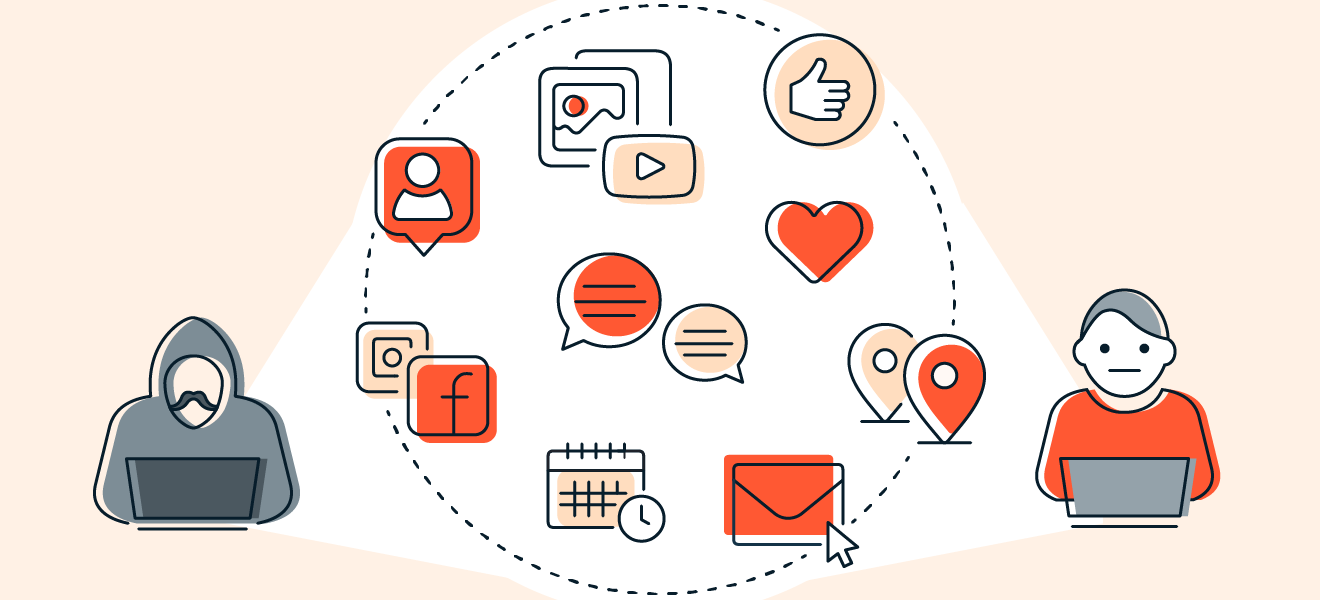
In Reamer’s article Social Work Boundary Issues in the Digital Age, the issue that made me the most uncomfortable was clients being able to find social workers online. Working as a Behavioral Health Technician in the emergency department, many of the patients I work with are understandably not happy about being placed on an involuntary hold. They are often upset, frustrated, or scared, and sometimes those emotions get directed toward the staff. I have had coworkers who have worked in behavioral health much longer than I have tell me to always be aware of my surroundings. They remind me that while I am safe inside the hospital, you never know what could happen once you leave work. Some have even shared stories about running into former patients in public who recognized them and came up to them. That has always stuck with me.
What makes me even more uncomfortable is how easy it is to find someone’s personal information online. There are websites where all someone needs is your name and the city you live in to find your address, phone number, and other personal information. Reading Reamer made me realize that technology has completely changed what professional boundaries look like. Before, I mostly thought about boundaries during face-to-face interactions with clients. Now, clients can find information about social workers without the social worker ever choosing to share it, and I think that makes maintaining boundaries much more complicated.
I also found myself agreeing with Reamer’s discussion about telehealth creating new boundary situations. During an in-person session, both the client and the social worker are in a controlled environment. With telehealth, there are so many things that are outside of our control. A client’s background alone can tell you a lot about their living situation, and that may be information they were not planning to share yet. On the other hand, the client also gets a glimpse into the social worker’s personal environment. What if my dog starts barking while a client is sharing something incredibly personal? What if my doorbell rings, my fire alarm goes off, or someone accidentally walks into the room? Those interruptions can completely change the moment. I also wondered what I would do if someone unexpectedly walked into the client’s room and it was someone they did not want me to know was there. Am I supposed to acknowledge that person or pretend I did not see them? It made me realize that maintaining privacy and confidentiality can become much more complicated when both the client and the social worker are outside of a traditional office setting.
I actually had one interaction with a patient who kept asking me to add them on Instagram. They repeatedly gave me their username and kept telling me, “I’m not crazy, I swear. I’m actually a really cool person. I know we would be such good friends.” It honestly made me uncomfortable because I did not want to hurt their feelings. I remember telling them that I could not add them because they were my patient. Then they responded by saying that once they were no longer my patient, we could be friends and that they would add me and come back to ask me to hang out. Looking back, I think I could have done a better job explaining why that boundary existed instead of simply saying no. If I were in that situation again as a social worker, I would tell the client that it is not because I do not like them or do not want to support them. It is because my role is to be their social worker, not their friend. Keeping that boundary protects both of us and allows me to stay focused on providing the best care possible. That interaction made me realize how difficult it can be to set boundaries while still trying to be compassionate.
One thing I found myself questioning while reading the article is how much responsibility is placed on the social worker. I think Reamer is right that social workers have a responsibility to think carefully about their online presence and maintain professional boundaries. However, there are so many websites today that collect and publish personal information without a person’s permission. Even if I never post my address or phone number online, someone could still find that information. I think that makes this issue more complicated because some of those privacy risks are completely outside of our control.
I think what would make me the most uncomfortable is if a client mentioned something about my personal life that I had never shared with them. I would immediately start wondering how they found that information and whether my safety was at risk. My first thought would probably be that I no longer feel comfortable working with that patient. At the same time, I would also think about how asking to be removed from their care might affect them. Would they feel rejected? Would it damage the trust they had in the treatment? That is what makes this ethical issue so difficult for me. One thing I realized after reading Reamer is that I had always thought professional boundaries were mainly there to protect clients. I had never really thought about how much they also protect social workers. Going forward, I know that setting those boundaries may sometimes feel uncomfortable or even disappointing to a client, but that discomfort is worth it if it helps maintain a safe and professional relationship for everyone involved.
Part Two:
Reading Haidt’s article made me think differently about the patients I work with in the behavioral health emergency department. Most of the people I work with are adults, although I also see teenagers who come in with depression, suicidal thoughts, suicide attempts, substance use disorders, and other mental health concerns. Their situations are usually very complex, and I do not think social media is the reason they end up in the emergency department. However, I think parts of Haidt’s evidence also apply to the population I work with. While I do not think social media causes someone to end up in the emergency department, I do think it can influence how some people cope with depression, substance use, or other difficult emotions.
One thing I have consistently noticed while working in behavioral health is that many patients struggle with healthy coping skills. When life becomes overwhelming, some turn to alcohol or drugs, while others isolate themselves or avoid talking about what they are feeling. Reading Haidt made me wonder if social media can sometimes become another form of avoidance. Platforms like TikTok and Instagram make it easy to spend hours “doomscrolling”, comparing yourself to others, or constantly consuming negative content instead of dealing with difficult emotions or reaching out for help. While I am not the person completing a patient’s assessment, I spend a lot of time talking with patients, advocating for them, helping redirect them when they are overwhelmed, and explaining the care process. After reading this article, I think I would pay more attention if a patient brought up social media because it may give me a better understanding of how they are coping.
At the same time, I do not think social media is always harmful, and this is where I think Haidt’s argument becomes more complicated. I remember one patient who came to the emergency department seeking help for alcohol abuse. They shared that they wanted to get sober because they had been watching people on TikTok share their recovery journeys, and it gave them hope that sobriety was possible. That experience reminded me that the platform itself is not necessarily the problem. It is often the type of content someone is consuming and how they use it that seems to make the difference.
I have also seen the opposite in my own family. One of my family members tends to cope with difficult emotions by doomscrolling on social media while also using drugs instead of seeking professional help. Watching that has made me realize how easy it can be to avoid dealing with painful emotions when unhealthy coping strategies are always available. Because of that, I do not think social media is simply good or bad. I think it depends on how someone is using it and where they are in their mental health journey.
Reading Haidt reminded me that every client experiences technology differently. Rather than making assumptions about social media, I think it is important to understand how it fits into each person’s life and whether it is helping or hurting their overall well-being.
Hi Melina! Shedding light on the dangers of clients finding professions online was so jarring to me. It is a concern that I never thought of in that way. I can’t imagine the feelings surrounding not receiving the resources you intended to then going after a profession’s personal life. In my post, I mentioned that hiding your social media, as so clients can’t find it, was dehumanizing in a way. Your post has given me a new perspective.
Melina,
You have rasied a number of issues that are really important when discussing boundary issues. I agree with you that we seem to be talking about the responsibility of the social worker – and that’s true because that is our job as professionals, teaching you how to become social workers. However, the job of boundary management should be shared equally by the organization for which you work. Training, protocols, organizational communication methods and sources are all ways that organizations need to share in the responsibility for setting strong boundaries.
All the examples you shared would create trepidation in any professional, and the response needs to be clear, concise, and immediate. And supervisors should take the responsibility for helping you craft responses that the organization then supports. Depending on the circumstances of your employment, many social workers don’t use social media at all and establish separate communication channels for their work. What is best for your situation, I cannot say, but you need to feel safe in doing your job.
Telehealth is a slightly different beast, and I would give clients more credit. Most clients who use telehealth are grateful for the opportunity to see a professional remotely and are comfortable with the arrangement. If they don’t want you to see something, trust me, you won’t. I think it’s a bit harder for the professional, because you do have to learn totally different ways of communicating nonverbally. When the isolation of the pandemic began, and we all started having constant Zoom meetings and appointments, we started referring to this as drinking from an emotional fire hose. Sometimes telehealth can actually be more emotional and reveal more nonverbal cues. Learning how to manage that is something different than in person; you are right.
IN terms of Haidt, you do a good job of discussing the application of his conclusions with adults. I found it interesting that you reference difficulty with coping skills. I think that, in some ways, is at the core of what Haidt is describing in his TED Talk. Young people never learned coping skills – so when they are faced with challenges, problems, or conflicts in adulthood, they are at a loss at how to cope.
I agree that abstinence from all technology is certainly not a realistic goal for adults. And I stay on Facebook because it connects me to my Zentangle friends. But there is an addictive element to the way this is designed that is problematic for a lot of adults as well.
Good discussion.
Dr P