

Part I: Through the Reamer Lens
Social Work Boundary Issues in the Digital Age (2024)
One ethical tension mentioned in Reamer’s article that I found most uncomfortable is connecting with clients outside of business hours. This resonated with me because I have experienced that boundary issue as a case manager. I did not give out my personal number, but I was still using my work phone outside of business hours. I was expected (by clients) to answer calls and text messages after hours. At first, I felt as if it were my responsibility always to make myself available. I wanted to ensure the families had what they needed and to solve any issues they had, even if it meant taking time away from my own family. However, I realized I needed to set boundaries to maintain professionalism and prevent burnout.
Another ethical tension that did not sit well with me is social workers having intimate relationships with clients. I have thankfully not experienced that boundary issue. I think that is one boundary professionals should not cross. However, I understand how technology can increase the potential to engage in a sexual relationship with clients. Being able to call, text, or even communicate through social media and other platforms at any time poses a significant risk.
I agree with Reamer’s opinion on technology making it challenging to maintain professional boundaries. Even if social workers do not mean to cross boundaries, it can happen unintentionally. In my opinion, to maintain professional boundaries with clients, social workers should be required to participate in ongoing training on the use of technology in practice. While it does not guarantee the elimination of all unethical issues, it reduces the risk.
If I had to explain my ethical position to a client I would say, “As a social worker it is my ethical responsibility to maintain professional boundaries to ensure that I am supporting you in the best way possible. If you need anything outside of working hours, I am happy to provide the after-hours contact information.” At my current agency, if we are out of the office, we must write an out-of-office email: “I am currently out of the office and will respond within 24 hours of my return. If you have an emergency, please contact the after-hours number at ….” My supervisor encourages us to turn off our work phones when not on call. When I first started, this was difficult for me because I felt the need always to be available to ensure the best service. However, I now understand the importance of setting boundaries and that not being available 24/7 does not make me a bad case manager.
Part II: Haidt in the Room with Your Clients
Although Haidt and Rausch focus on adolescents, smartphone and excessive screen time use extend across a variety of populations. I work with both children and adults and have observed the impacts of technology use on both sides. Many children who use social media such as TikTok, Facebook, Snapchat, and other platforms are exposed to inappropriate content, bullying, and unrealistic expectations. These days, children are more inclined to connect via social media rather than in person. I have observed children and parents not interacting with each other in family-like settings because they are on their phones. This issue causes strain in many relationships and isolation. I’ve had parents compare their lives to others on social media, causing them to feel inadequate or guilty of their current circumstances. I have observed how smartphone use can interfere with engagement, participation in services, and bonding.
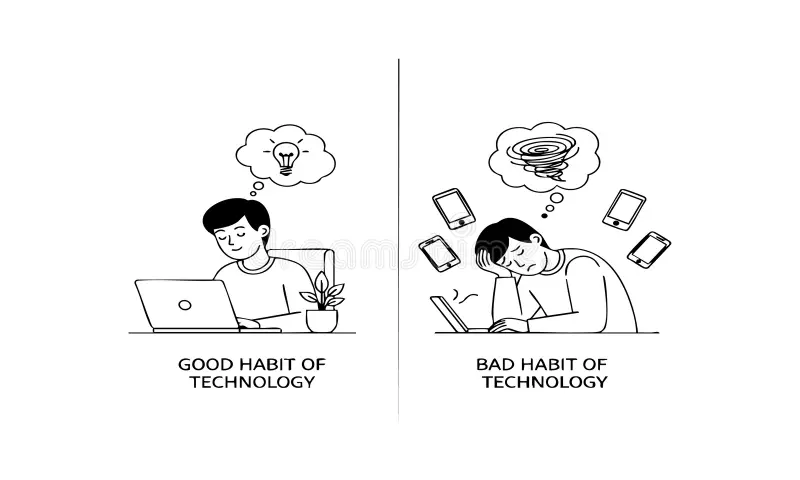
On the other hand, I see the benefits of social media. The clients I work with face many barriers, such as limited access to resources, lack of transportation, and employment issues, and I have observed that social media has made it easier for them to access the resources and services they need. Many of them are in different Facebook groups where they can connect with others and share or find resources. Some also use smartphones to access mental health services. Overall, technology can be helpful when used in moderation.
References
Reamer, F. G. (2023). Artificial Intelligence in Social Work: Emerging Ethical Issues. International Journal of Social Work Values and Ethics, 20(2), 52-71. https://doi.org/10.55521/10-020-205
Reamer, F.G. (2023). Boundary issues. Advances in Social Work, 23(2), 382-391. https://journals.iupui.edu/index.php/advancesinsocialwork/article/view/26358/25414
Haidt, J., & Rausch, Z. (2026, April 9). The case against social media: Seven lines of evidence. After Babel. https://www.afterbabel.com/p/seven-lines-of-evidence-against-social-media?r=32tyct&utm_medium=ios&triedRedirect=true
Really thoughtful post. I like that you mentioned technology being a barrier even within family units and struggling to connect in-person. I work in addiction treatment for young adults and I notice similar patterns even though they are no longer adolescents. Many of our clients grew up in the digital age and really struggle to build meaningful relationships and are dependent on their parents. It makes me wonder if what Haidt what talking about in adolescents has long term effects that linger into adulthood. I also agree that technology isn’t all negative, I have seen virtual support groups actually create connection for people, so you make a good point in acknowledging that technology in moderation can be healthy.
Your supervisor sounds very supportive! Mine also told me that it is important to try to separate your work and personal life to avoid burnout, and to also have a separate phone number or work phone only available during office hours. I share your feeling of responsibility to be available for your clients whenever they need help, but as much as we want to help our clients with their lives, we also need to take care of ourselves so that we are able to do the good work.
The love-hate relationship with social media and tech is very real, and I share that. I appreciate how information and resources are readily available for us, but the way it is straining personal relationships, and even families, as you mentioned, is so hard to ignore. The way we interact in addictive ways with social media is not all on us, as Haidt and Rausch mentioned, because they are being made that way so that the companies can profit from us. Regulation is definitely needed to protect younger generations and companies need to be held accountable for their actions.
While I agree that technology can have both positive and negative impacts on individuals, I think it is also important to consider the implications of youth without access to technology. In my personal experience working at a community center with youth, some of the kids felt isolated as a result of not having social media due to things like not having Wi-Fi. They struggled to connect with other students because they didn’t have a phone so couldn’t communicate outside of school or relate to popular social media trends that many students bonded over. Just like overconsumption can negatively affect youth development, we must also consider the impact on students without access, especially when technology is the main way youth communicate with each other.
Kierra,
Your personal experience is a great example of what Reamer is talking about. We are all motivated to help people; otherwise, we would not have chosen this profession. It is harder to realize that we also have to help ourselves. Setting clear boundaries is one of the most important and most discussed skills necessary to be a competent social worker. And yet, it is also one of the most difficult skills to learn.
Most of us learn about the realities of boundaries in the field, in practice, and by making mistakes. It is one of the reasons that our profession is so committed to the requirement of good supervision. And I would suggest that is necessary, not just during your pre-certification period, but during your entire career. Most professionals in private practice pay for personal supervision. We often cannot see something when we are right in the middle of it.
When Reamer discusses sexual misconduct, it’s important to know that this is the most serious boundary issue we face, and yet some social workers seem to find a rationale to cross it. If any social worker finds themselves dealing with those kinds of feelings, they need to seek support immediately.
I think your discussion of families and social media is a good one. While we already know the trouble that begins with young people and social media, we frequently ignore the same behaviors in the adults around them. We are all susceptible to the algorithms, and we need to confront that problem head on.
I don’t think any of us would deny the positive elements of social media. We all have examples of how it creates connections. I think the issue is learning to utilize social media with INTENTION. And when you are fighting an algorithm every single time you sign on, that isn’t an easy assignment.
Good discussion.
Dr P