
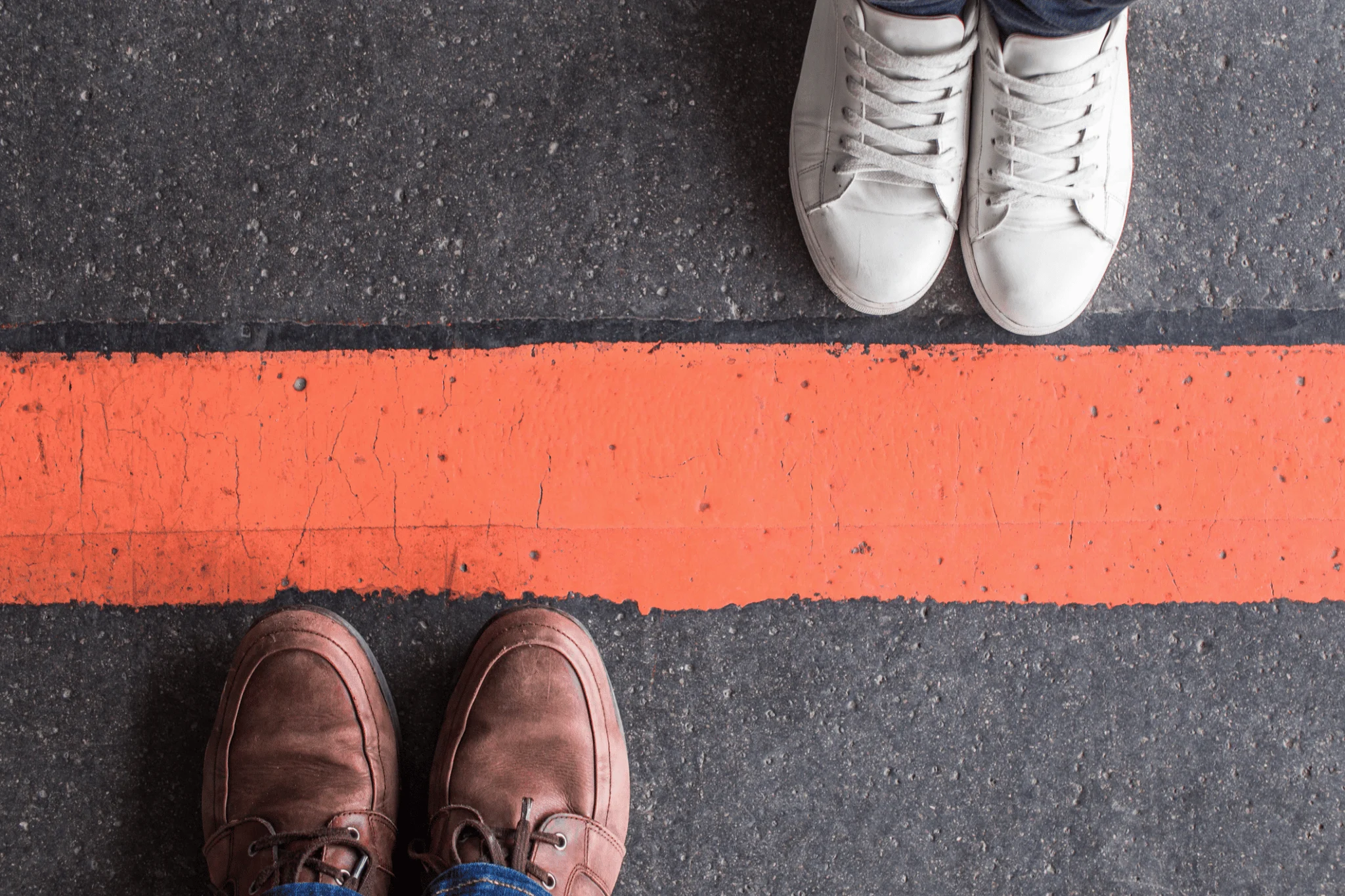

- Have you already encountered a version of this tension in a placement, a prior job, or
even your personal life? What did you do?
I have not had a personal experience with boundary issues online with a client or in my personal life, thankfully, but what this article did remind me of was a specific teacher in my high school while I was attending. I did not have this teacher, but I had heard from my classmates that she would show favoritism for certain students and get overly involved in the personal lives and conversations of students, as well as following students on her public social media account. Looking back on this as an adult, she had definitely had issues with setting and respecting boundaries, not only as a teacher, but as an adult. It seems like she may have developed some form of dual relationships with students and felt too comfortable interacting with them in nonprofessional ways. There is also the issue of the power imbalance, where the students hold less power than an adult in an educational setting, and her being a teacher who has control of educational factors of a child’s life gives her even more power over them. I thankfully never interacted with this teacher, but I always use this as an example of what not to do as an adult, and in my professional life, and how inappropriate her actions were.
- Where do you find yourself agreeing with Reamer — and where do you genuinely pushback?
Reamer’s point about how the “unique informality of online and digital exchanges can exacerbate boundary confusion and risks in ways that are less likely in traditional office-based encounters” (Reamer, 2023) is something I would agree with and doesn’t surprise me because of how much social media and the internet have evolved into a form of communication between not just friends and acquaintances, but also influential people and celebrities. Harassment, bullying, and judgmental opinions flow freely online about anyone, and parasocial relationships with famous people have more easily developed because of this access. This makes it easier for people to confuse boundaries with all people. If it is this easy for people to confuse the boundaries and relationships with people who they have no connection in real life, then it is no surprise that professional relationships are blurred because of online communication.
I did not come across something I fully disagreed with Reamer on. Still, a point he made that I found difficult to form an opinion on was his mention of social workers using TikTok and Instagram reels to educate people online. I understand and agree that it is better to have private personal social media, but I also find myself appreciating and interacting with the social media of social work and mental health professionals. The content I see from them has to do with relatable situations, and more so, educational content and advice regarding social work as a profession, so it is usually not the creator’s personal account. I like that there is a way to receive information about social work from our peers that we normally wouldn’t encounter face-to-face, and it is a way to find community within social work when there are so many differences in each state, having to do with licensure and practice. It is also important to consider situations in which clients could find these educational accounts and how to approach them, because, as useful as this content may be, boundaries could easily be crossed, complicating the professional relationship.
- If you had to explain your own ethical position on this issue to a client right now, what
would you actually say?
What I would communicate now to a client regarding digital boundaries would be that I hold a professional helping relationship to be important and that I want to do everything in my power to respect their healing process and to help them progress, and with that comes specific boundaries that will help facilitate that progress. I would say that those boundaries will include not being able to communicate outside of office hours, but I can provide them with resources and tools that they can access when I am not available. It will also include not being able to communicate via social media in ways such as following each other on personal social media and direct messaging. Additionally, if they ever feel uncomfortable or unsure about anything online that they have encountered, they are more than welcome to share with me so that I can help them feel respected.
Haidt and Rausch
I have an interest in working with adolescents, so Haidt’s TED talk and Substack relates directly to the population I want to work with in the future. After speaking with professionals who work in primary education and interacting with children and adolescents who are currently in the education system, the difference between now and when I was in K-12 is distinct. I had to learn cursive in the 3rd grade, had to be able to write a paragraph by hand in elementary school, memorize the multiplication tables and take timed tests, and carry large textbooks to do my homework every night in high school. I’ve seen that most math assignments are on tablets in elementary school, children are struggling to write and put together sentences in elementary school, middle schoolers and high schoolers are given tablets or Chromebooks, and their textbooks are just online, along with their assignments. As Haidt mentioned in his TED talk, since 2010, when one-to-one devices were introduced in schools, national testing scores have steadily declined. Social media continues to grow and cater to the impressionable and undeveloped minds of children by getting them addicted to social media; the decline in education and children’s mental capacities will continue, and maybe even decline faster. The introduction of devices is serving as a crutch for children to barely get by and develop cognitively, emotionally, and socially. This could affect them long-term by having them develop addictive behaviors early on, from social media, and carry them into adulthood, keeping children isolated and without the skills to be able to socialize and develop meaningful relationships, therefore making them more likely to develop depressive and anxiety disorders.
I feel like, as potential clinicians and future professionals in social work and mental health spaces, we may see an increase in adults in the future who are struggling and needing services with addictive disorders. We may also see adults, single or in relationships, struggling with socialization and developing meaningful adult relationships, but even in this situation, if they never learned to seek out help from people instead of the internet, they may not have the skills to be able to seek out resources. There are important protective and preventative measures that children are at risk of not having because of the development of technology. Federal, state, and local governments are not allocating funding and resources to preventative measures, and instead investing it in companies that are actively pushing for fewer restrictions on tech, which also play an important part in their development.
It is also important not to be ignorant of the fact that technology isn’t going anywhere. We won’t be able to make technology go away, but we can advocate for preventative measures, conduct research to prove that technology is not the answer to advancing education, and stay informed on how technology is advancing so that we can be aware of risks being posed to vulnerable populations.
Thanks for sharing your perspective, you make good points about technology possibly contributing to the cognitive decline for children. One thing I wanted to highlight though is your point about practitioners using social media as an educational platform. While I do see both perspectives of possibly blurring boundaries and also being educational tool, I think it is also important to consider the ethical dilemmas from information being presented without any type of context or misunderstood for people not in the field. People all have different approaches and opinions in the field which could easily lead to misinformation. I have seen this personally in just how different doctors may diagnose a patient, people venting frustrations in the field, or maybe having different viewpoints on how to work with different clients. While it may have good intention, without a proper framework, information can be misunderstood and harmful. For instance, a practitioner could maybe talk about their struggles they face in the field. Although to fellow practitioners it can be helpful to connect with others and support each other with strategies, a potential client could see the same video and feel like the practitioner is not properly trained which could cause distrust in those services.
Thank you for your post! I feel similar that social media usage by professionals are increasing however it is not necessarily a bad thing. I believe that more outreach can be extremely beneficial for some and educate individuals services that are available to them. I myself have come across services that I did not even know I needed. I definitely think there should be some boundaries to this as it could be very easy to violate the privacy of others. I also appreciated and shared the point that technology and it advancements are going to and increase. I believe this is why we should avoid straying from technology to be better prepared for the practice. I feel this will also encourage individuals and find new ways to encourage different education styles and place more responsibilities on the parents of youth to combat social skill delays and increased social anxiety!
Verania,
You make good points about Reamer. We haven’t talked much in these posts about social workers using social media to provide psychoeducation to other professionals. I see that as similar to my thoughts about any communication with clients on social media – it should be on a professional/organizational account, not on a personal one. You make a good point there. There are lots of educational videos on social media, whether TikTok, Instagram, or YouTube. I think the difference, for me, is when this information becomes targeted to specific individuals. I know we can follow or sign up for a person’s channel, but when microtargeting gets involved, I think we are moving into the realm of algorithms, and that worries me.
You do a good job of connecting the impact on youth to the impact on adults, particularly young adults. I suspect Haidt would definitely agree with you. He would suggest that this is simply a continuation of a pattern, and probably talk about the fact that our brains aren’t really finishing their development until we are in the mid-twenties. You might be interested in The Center for Humane Tech. They talk about the development of technology and social media with an entirely different set of goals. I think you might find them interesting. https://www.humanetech.com/
Good discussion.
Dr P