

Part 1 – Through the Reamer Lens
The ethical issue that made me the most uncomfortable in Reamer’s article was professional boundaries when communicating with clients outside of agency-approved channels. It made me uncomfortable because I have already crossed that line once. While working at The Salvation Army as a disaster case manager, I gave several clients my personal cell phone number because I knew I would be leaving the organization soon. I did not want my departure to interrupt the support they were receiving, especially since many were dealing with housing instability and other stressful life circumstances. At the time, it felt like the compassionate thing to do. Looking back, I realize that good intentions do not eliminate ethical risks. Once clients have a personal number, it becomes much harder to maintain clear professional boundaries.
I also experienced another ethical conflict while working at The Salvation Army. The facility director showed blatant favoritism and misappropriated organizational property. When I reported these concerns to Human Resources, I was removed from that location. Although this situation was not about digital boundaries, it taught me that acting ethically is not always rewarded and that doing the right thing can have personal consequences.
I agree with Reamer that technology has made professional boundaries more difficult to maintain. Digital communication makes it easy for professional and personal lives to overlap. His discussion of blurred boundaries resonated with me because of my decision to share my personal phone number with clients. However, I push back on his discussion of privacy settings and digital footprints. He acknowledges that “algorithms used by online social networking platforms may generate intimate-sounding messages… even when they are not initiated directly by a social worker.” Technology changes constantly, and social workers cannot reasonably be expected to understand every algorithm or platform update. A client discovering a worker’s personal information is not always the result of negligence. Sometimes technology exposes information despite a person’s efforts to protect their privacy.
If I had to explain my ethical position to a client today, I would say:
“I want to make sure you always receive consistent, professional support. I communicate with clients through my agency’s approved phone number and email rather than my personal phone. If you need help after business hours or during an emergency, I’ll make sure you have crisis numbers and community resources available. My goal is to support you while maintaining professional boundaries that protect both of us.”
Ethical boundaries are not about being distant from clients. They are about creating relationships that are supportive, professional, and sustainable. While I understand why I shared my personal number, I would handle that situation differently today.
Part 2 Haidt in the Room with Your Clients
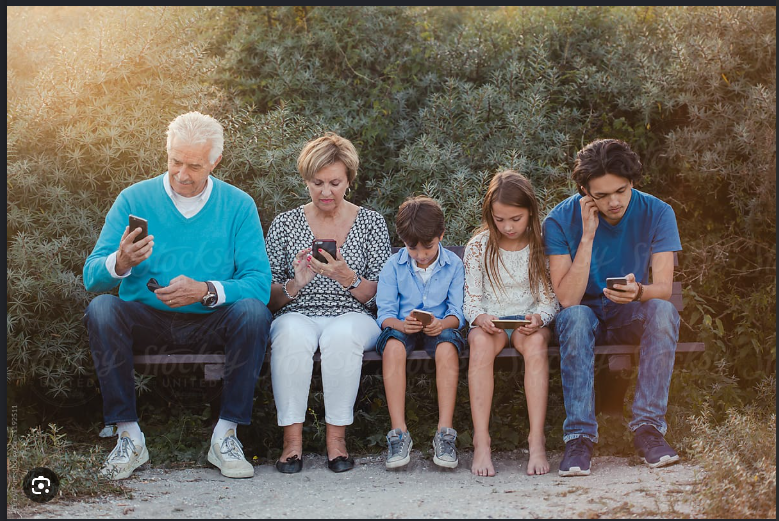
Haidt’s evidence focuses on adolescents, but I think the patterns he describes are relevant across all age groups. The population I think about most is adults ages 40–60 because many are raising teenagers while also managing their own technology use. During my internship at the MLK Jr. Collaborative, I worked with adults who checked their phones throughout conversations or became distracted by notifications while discussing housing, employment, or financial concerns. Social media was not the reason they sought services, but constant phone use often interrupted communication and made it harder to stay focused on solving immediate problems.
Platforms such as Facebook, Instagram, and TikTok can keep people constantly connected while increasing stress, comparison, and distraction. Haidt argues that social media contributes to rising anxiety, distraction, and weakened real-world relationships, and those issues do not disappear once someone becomes an adult.
In families, I have seen parents become frustrated because they struggled to get their children’s attention while everyone was focused on a phone or other device. Helping families create healthier boundaries around technology could strengthen communication and reduce conflict. The same concerns apply to couples, where social media can fuel misunderstandings, comparison, or emotional distance. In group settings, heavy social media use may make face-to-face interaction more challenging, so I might need to make group work more structured and intentionally focus on relationship building.
Addiction services make the issue more complicated. Haidt shows how social media platforms are designed to be addictive, which may intensify compulsive behaviors in adults. At the same time, adults often need technology for work, accessing services, communicating with family, and finding community resources. Unlike adolescents, they cannot simply avoid digital platforms, so interventions should focus on healthy and intentional use rather than complete avoidance.
Overall, their evidence holds up across many populations, but applying it outside adolescence requires flexibility and awareness of each client’s developmental stage and environment. Haidt’s research gave me language for something I had already noticed during my field experience: technology is not always the presenting problem, but it can make communication, relationships, and engagement with services more difficult.
I appreciated your honesty about sharing your personal phone number with clients. I believe that a lot of social workers can identify with the desire to go above and above for their clients, particularly during times of crisis. I agree that upholding boundaries ultimately protects both the client and the social worker, and your perspective demonstrates how good intentions can nonetheless lead to ethical dilemmas.
Using a free Google Voice number in place of a personal phone number is one option that might be useful in circumstances similar to yours. I never gave clients access to my personal contact information. During my most recent practicum, I used a Google Voice line. Additionally, it gave me the flexibility to regulate my availability by turning notifications on and off in accordance with work hours. This helped me establish more defined professional boundaries while still being reachable at the right moments.
I also agree with your point about technology constantly changing and the difficulty of keeping up with privacy settings and algorithms. This highlights the necessity of continuing education in digital ethics and agency support.
Your analysis of Haidt’s study struck a chord with me as well, particularly the notion that technology affects both adults and teenagers. I concur that assisting people in setting healthier boundaries for their use of technology is more important than doing away with it.
Giving clients your personal phone number is never a good idea. I learned this lesson the hard way. Early in my career, I did not have work cell number so I thought I was being helpful and accommodating by sharing my personal number with clients. I believed it would make communication easier and show that I was always available to assist them. The clients would call in the evenings or on weekends, disrupting my personal life and making it difficult to fully disconnect from work. Maintaining a clear boundary between professional and personal communication is important, both for own well-being and expectations with clients.
Working with various demographics has shown that there are guidelines needed for all interactions. Understanding the parameters of what the professional relationship should look like between a clinician and client can help mitigate unprofessional mishaps. Misunderstandings can happen, but when the lines are being crossed, there should be steps in place to correct the course of action while remaining professional and ethical. Recognizing that there is a pattern that appears when clients receive the phone number in order to reach their case manager is something. They feel as though they have the right to have access to you at all times and that is not acceptable, and the mention of business hours should be a great way to alleviate that.
Charles,
I would agree that keeping boundaries is not always easy, and sometimes, when they are breached, it isn’t due to neglect. However, the question then is what we do, right? How we respond when a client crosses boundaries is the real challenge. I think working with people during a disaster is a hard environment as well. All of us are susceptible to feelings of empathy that can test our ability to maintain strong boundaries. I know I have had that experience.
I am sorry that you had an experience at the Salvation Army that punished ethical standards rather than rewarding them. Unfortunately organizations don’t always make the ethical choice, but rather the expedient one.
I think your point about Haidt’s arguments applying across populations is right on. And we may need to be flexible in how we apply them. But the bottom line is the same addictive forces that we are concerned about with children. That is at the core of what we mush change if we are going to utilize technology in ways that are to our benefit.
Good discussion.
Dr P