
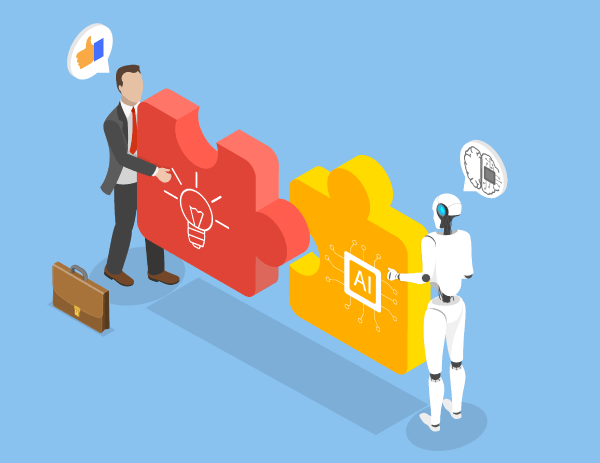

After reading the articles and watching the BBC clip, I was left thinking less about “what’s next for AI” and more about what’s next for us. Each piece offered a different lens on how technology is changing the world of work, and honestly, none of them were very comforting.
What Stuck with Me
BBC Video:
I had no idea how much water AI uses just to cool its data centers. It seems like something straight out of an apocalyptic movie to think that the digital tools we use every day have such a real environmental cost.
“The Social Contract Is Breaking and AI Is Holding the Hammer” (Ninza7):
This one was eye-opening. It talked about how AI isn’t just replacing jobs, it’s breaking the trust between people and the systems that are supposed to protect them. The idea that automation is slowly eroding fairness and purpose is something that’s going to stick with me.
Axios:
I expected AI to mainly affect blue-collar work, but Axios showed how it’s actually taking out white-collar jobs first. People who once felt secure, lawyers, analysts, journalists, are now just as replaceable.
Mattlar:
This one called out the truth that a lot of layoffs “blamed on AI” are really just about cutting costs. Companies are using AI as a scapegoat to make profit-driven decisions look futuristic. The insight that companies are using AI as cover for deeper cost-cutting and shareholder appeasement was something I hadn’t explicitly connected before reading this.
Comparing Axios and Mattlar
Using AI (ChatGPT), I compared the Axios and Mattlar articles.
Prompt 1:
“Compare how Axios and Mattlar explain the connection between AI and corporate layoffs. Where do they agree or disagree?”
AI’s Response Summary:
Both articles agree that AI is reshaping labor markets and prompting layoffs, but they disagree on why. Axios credits this to efficiency and advances in technology. Mattlar blames systemic greed and misdirection. AI described Axios as “neutral and data-focused,” while labeling Mattlar as “critical and activist.” I thought this was fair but slightly biased, it framed Axios as more credible mostly because it was journalistic, not because its argument was stronger.
Prompt 2:
“Which article offers a more persuasive argument about AI’s impact on workers, and why?”
AI’s Response Summary:
ChatGPT identified Mattlar’s piece as more persuasive, noting its emotional appeal and focus on ethics. It argued that Axios “reported the symptoms,” while Mattlar “diagnosed the disease.” I can agree with this; facts inform, but passion inspires change.
Using AI to Analyze AI
This showed me how much AI’s tone shapes interpretation. Depending on how I phrased the prompt,the responses usually centered around either objective analysis or moral judgment. It reminded me that AI doesn’t think, it mirrors the data and values we feed it. I also realized that the more context I shared, the more detailed and nuanced the responses became. That was both impressive and a little unnerving.
I felt a mix of awe and slight discomfort. It was really impressive in how efficient and insightful it was, which made me feel inspired and wonder, “If AI can analyze writing this well, what does that mean for human writers?” It highlights how our emotional intelligence, empathy, and creativity are qualities that make us uniquely human and genuinely valuable.
Where We Go From Here
AI isn’t going anywhere, so the focus has to be on how we adapt. That means being transparent about how it’s used, protecting workers, and not letting companies hide greed behind technology. If the social contract is breaking, maybe it’s time we help rewrite it, with empathy, not algorithms.
References
BBC News. (2024, April 8). AI’s hidden water cost [Video]. YouTube. https://youtu.be/b0C56yqIkbk
Mattlar, J. (2024, April 29). Companies are blaming AI for layoffs. The real reason will piss you off. Medium. https://medium.com/@mattlar.jari/companies-are-blaming-ai-for-layoffs-the-real-reason-will-piss-you-off-149639ce47cf
Ninza7. (2024, February 13). The social contract is breaking, and AI is holding the hammer. Medium. https://ninza7.medium.com/the-social-contract-is-breaking-and-ai-is-holding-the-hammer-002d8d4aa96c
VandeHei, J., & Allen, M. (2025, May 28). AI and the white-collar job reckoning. Axios. https://www.axios.com/2025/05/28/ai-jobs-white-collar-unemployment-anthropic
Chelsea,
Good job on this post. You raised all the important issues and your also shared your thoughts and ideas. Your experience with AI is both interesting and significant. You are correct, it only has the data we feed it. And when you interact with an AI tool, they learn from that interaction. I agree it is both impressive and unnerving. Thanks for sharing your prompts and the things you learned from using them and changing them. Folks who are familiar with AI tools are aware of that, and there is a lot of discussion about exactly what is happening in that interaction.
There is a writer on substack, Linda Caroll, who talks about the impact of AI on both creative writing and journalism. You might be interested in reading her work.
Nice job.
Dr P
Hello Cdoucet,
I agree with you that the BBC video on AI generating so much water is something I never considered before. It highlights one negative environmental impact of AI. The “White Collar” article was particularly interesting to me because I’ve recently seen employers creating videos on how they can save costs by using AI to replace certain positions. Learning about this aspect was a bonus. If it weren’t for this course, I would have had no idea about the extent of AI’s impact. Now, I feel it is our duty to share this knowledge with others so they can make informed decisions about their career paths.