

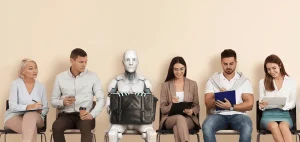
Can we truly replace humans with AI completely? If so, what will we do if we can not work? I recently read an article on the Fortune digital platform about Elon Musk’s prediction about AI, replacing jobs, basic income, and money having no relevance. “Optional Work”, “Working as a hobby, hobby for work”, and robots serving humans are all titles that I think of when I think of this article and how it relates to AI. I want to look at the glass as half full and be very optimistic about AI, job security, and yes, socializing and human interaction. Most of our interactions are at work, school, and basically interacting with other humans. Yes, I want to be able to use ChatGPT, Claude, Perplexity, and all other AI platforms ethically and safely. However, I have to continue to think of how much AI affects the natural resources as described in the video and what will be the responsibility of the humans to make sure we continue to have these natural resources, especially water. We need water as defined in the video for hydration of our plant life, animals, humans, and for survival. In just 5 short years we will see some changes, both good, bad, and ugly in reference to our natural resources.
According to Thakur in “The Social Contract Is Breaking, and AI is Holding the Hammer”, AI is having a significant, disruptive impact on social work and related professions, primarily through job displacement and changing workplace dynamics, as described in the attached articles. We’ve talked about AI replacing jobs and the affect on social work, Can we be replaced and displaced by AI and if so, how many years do we have before the robots become, clinicans, therapists and social workers? ” A future where a handful of tech billionaires own the AI and, by extension, own everything else. The rest of us? We just live here.” Wow! This statement was a hard one and possibly true. What is the end game here? How can we prevent this from happening? Surely, we’re not here to just exist amongst the owners and creators of AI and just sit on the sidelines watching to see what happens next.AI is having a significant, disruptive impact on social work and related professions, primarily through job displacement and changing workplace dynamics, as described in the attached articles.
Axios reported, the introduction of advanced AI technologies is driving layoffs in both white-collar and entry-level positions, not just manual labor jobs. Multiple major companies (Microsoft, Amazon, Intel, Tata Consultancy Services) reported job cuts of thousands in 2025, citing a move toward AI-driven operations. What does this mean? We must learn more about AI? Prevent AI from taking all the jobs? Or should we brace ourselves for the basic income and find a way to be happy with what we’re given? It’s interesting how all of these coimpanies can layoff and then in the next year or two start hiring for technical jobs to monitor and watch the AI bots and technology. There’s a projected rapid acceleration in AI adoption, with estimates that up to half of all entry-level white-collar jobs may be eliminated in certain industries within the next 1-5 years.
In social work and public services, AI can contribute to automate many analytical and repetitive tasks, which could reduce the need for some roles i.e. junior administrators, case managers, and data analysts. What will be the driving point to provide the social services and public services that we will soon need if robots and AI alike are taking most of the jobs? Will social work, social services, and public services be considered a professional job or will these positions be an essentil part of our lives. According to the articles, not all jobs are AI displacement, however AI is used as an excuse for cost cutting or not filling vacant positions. The powerful leading and controlling the powerless and in this case it’s the have versus the have nots.
Rapid automation and workforce shifts are expected to increase the demand on social workers to address the resulting unemployment, economic insecurity, and mental health challenges. The field of social work must also adapt to technological changes, including the integration of AI into functions like case management, client intake, reporting, and administration. There will always be opportunites and risks with AI and adaptation of AI in social work. It is crucial to prioritize advocacy efforts, education, and policies to ensure that the benefits of this technology are distributed equitably and that vulnerable populations are safeguarded. In essence, while AI offers considerable potential for productivity gains, its influence on social work necessitates careful consideration of potential job displacement, evolving labor dynamics, and the critical need for new strategies in social welfare and workplace fairness.
References
BBC News. (2024, April 8). AI’s hidden water cost [Video]. YouTube. https://youtu.be/b0C56yqIkbk
Fortune Editors. (2025, November 20). Elon Musk: AI, robotics will make work optional and money irrelevant. Fortune. https://fortune.com/2025/11/20/elon-musk-tesla-ai-work-optional-money-irrelevant/
Mattlar, J. (2024, April 29). Companies are blaming AI for layoffs. The real reason will piss you off. Medium. https://medium.com/@mattlar.jari/companies-are-blaming-ai-for-layoffs-the-real-reason-will-piss-you-off-149639ce47cf
Ninza7. (2024, February 13). The social contract is breaking, and AI is holding the hammer. Medium. https://ninza7.medium.com/the-social-contract-is-breaking-and-ai-is-holding-the-hammer-002d8d4aa96c
VandeHei, J., & Allen, M. (2025, May 28). AI and the white-collar job reckoning. Axios. https://www.axios.com/2025/05/28/ai-jobs-white-collar-unemployment-anthropic
I thought your post did a great job showing how fast AI is reshaping work and how unprepared a lot of our systems are for that shift. The example you pulled from Axios made the issue feel real because those layoffs show how even traditionally secure jobs are being affected. Your connection to social work was important too. It reminded me that the biggest risk is not AI replacing us but agencies using it to justify cutting positions and leaving the remaining workers overwhelmed. Your post made me think more about how these changes could widen existing inequalities and why our field needs to stay involved in shaping how AI gets used.
Hope you enjoy the rest of the semester 🙂
Insightful post! great point on incorporating AI into certain areas of social work such as the case management. I think that by doing that the AI would provide accurate information to the social worker with regards to the assistance that they may need instead of having the AI invade the social work profession entirely.
Kimberly,
I thought your discussion of the questions regarding AI and the articles you read was excellent. You have captured the dilemma in which we find ourselves. I was confused about why you didn’t do any of the AI portion of the assignment. You were supposed to take the two articles and use an AI tool to discuss them and compare them. Then you were to talk about what you expected and what surprised you. I get that we are all concerned with the impact of AI, especially environmental ones. But, as you so eloquently say, we have to become comfort table and familiar with this technology. So I really wanted to hear about your experience using this technology for this assignment.
Dr P