
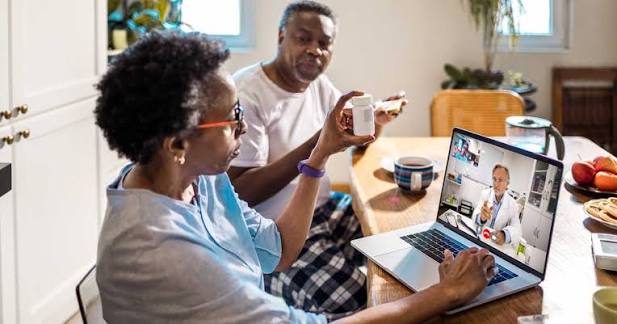

The existence of telehealth, as reported by Balogun et al. (2025), is consistent with my personal views on remote services, as the obstacles mentioned in the article are real. I agree that the vulnerable populations are the ones who require the services; more significantly, they are the ones who frequently no-show for appointments or have more cancellations because of their unfortunate circumstances, such as lack of transportation, low income, or people with disabilities, which are highlighted in the article. The difficulties of health insurance coverage with telemental benefits are one example that I think the author neglected to address. You may have in-network services, but the provider you currently see may not be in network with your insurance company. This could result in an out-of-pocket expense for the client or patient, which may force you to find a new provider covered by your insurance. All healthcare insurance and benefits are never the same; each healthcare company has different requirements, such as specific providers per your network plan and premium. And in that case, you might feel at ease seeing the same physician you’ve been seeing for months or years, but because of your insurance, you might need to find a new one and begin the process of developing a rapport with them, which can be difficult, as well as providing them with the history of your particular problem and diagnosis.
The digital gap is, in my opinion, the biggest obstacle to telehealth utilization, lacking internet access or access to electronic devices. This has an impact on rural and low-income regions as well as older adults who may not be aware of the advantages of telehealth. These communities stand to gain the most. The responses of the practitioners were not particularly surprising after reading the study “Exploring telemental health practice before, during, and after the COVID-19 pandemic.” They were all legitimate; however, when it brought up, comfort, it raised concerns about working remotely with clients. Given the sudden nature of COVID-19, what telehealth training and development did providers receive before and throughout the pandemic? I was surprised to learn that 17% of people used telemedicine every day before COVID-19 because I don’t recall hearing about them previously. I wouldn’t have anticipated anything different, but I did anticipate that the rate would be high during COVID-19 because of isolation.
Location and increased confidence were two elements that influenced a practitioner’s decision to stick with telemedicine. Due to transportation obstacles, the service was more beneficial to rural towns. Because they could still assist the marginalized groups, the practitioners felt more comfortable utilizing the service. In my opinion, telemedicine would allow me to assist people in underserved populations who might experience difficulties with childcare, transportation, or money. I could still help clients via teleservices so they wouldn’t miss crucial appointments or require resources for themselves or their families. The clients’ quality of life can be enhanced by having flexibility.
Reference
Balogun, A. K., Dada, S. N., Kazeem, O., & Bakare-Adesokan, K. A. (2025). Integrating telehealth services in social work practice for vulnerable groups. World Journal of Advanced Research and Reviews, 25(1), 1984–1991. https://doi.org/10.30574/wjarr.2025.25.1.0248
Zhu, D., Paige, S. R., Slone, H., Gutierrez, A., Lutzky, C., Hedriana, H., Barrera, J. F., Ong, T., & Bunnell, B. E. (2021). Exploring telemental health practice before, during, and after the COVID-19 pandemic. Journal of Telemedicine and Telecare, 30(1), 72–78. https://doi.org/10.1177/1357633×211025943
I think that you brought up an important point that the author failed to address, which was the impact of health insurance, especially the clients that I work with, who usually have Medicaid and Medicare, and ensure that during open enrollment, their services are still covered, because they don’t want to switch doctors. And there have been clients who will pay the copay if insurance does not cover services at our clinic because they have been coming for years. And there have also been some clients who have left because they moved to another county, but have come back because the place they went to did not offer treatment options.
Hi Ebony,
I agree with the article’s point of view on remote services as well. Upon reading multiple posts, it is clear that many within this course also have similar views. Also viewed the digital gap to be the greatest obstacle. I feel as though this is a similar obstacle to in person services. Many individuals lack the financial stability for in-person services and similarly this ca be applied to online services. I understand that many older adults also have mobility issues so I wonder if there is a better way for this population to receive the services they need as digital literacy is often a barrier as well.
I liked what you said about the digital divide and how the communities that face the most challenges with technology such as low income and older individuals actually have the most to gain from what telehealth offers. Working in adult substance abuse treatment, I work with many older family members who struggle with digital literacy, therefore do not get to engage in the family programming component of the program consistently. Family involvement leads to better outcomes in this field, so it is hard to reconcile when a family member isn’t able to participate fully due to these challenges.
Your point about insurance coverage being a challenge that should have been discussed more was a great point. Even if telehealth is available, it doesn’t always help if clients can’t afford it or have to switch providers because of their insurance. I also like what you said about telehealth helping people with transportation and childcare issues. It really can make it easier for people to get the support they need without missing appointments.
Ebony,
I think it’s important to remember two things about these articles. First, they are meant to be literature reviews – in other words the authors are reading articles during this time period in order to give us a picture of how telehealth is being used at that moment in time. And in addition, the Zhu, et.al. article was trying to see if things had changed due to COVID and how it would move forward. So they reported on things that influenced that particular group of data, right? You are correct, they did not talk much about health insurance issues as they relate to telehealth. I think that was because there wasn’t much conversation about that during that period. It is really only lately that we have been having more robust discussions about which telehealth appointments will be covered under your insurace. Medicare, for instance, just released a new statement of coverage of telehealth.
I’m not sure what your comment – when it brought up comfort it raised concerns about telehealth
I also think it’s important to remember that many of your observations depend on exactly what servi ce is being provided through telehealth. At this point, because of all that has happened,most health related telehealth appointments are covered. There is some argument about payment schedules, but less argument about coverage. The in and out of network argument is the same one that has been going on all along and continues to be the result of a broken health care system, right?
When it comes to therapy, the only people receiving telemental health are people who already have the ability to get coverage for mental health services, or the ability to pay for them out of pocket. You may find it interesting as we continue through the semester, to read about the work of the University of Minnesota Institute for the Advanced Studies in Child Welfare. They talk at leangth about the impact of telehealth and other technology-mediated services impacing child welfare services.
I didn’t understand your comment about “they were all legitimate but when it comes to comfort there were concerns about telehealth” (I may be paraphasing, but I think you can tell where I mean). And the rate of telehealth during the pandemic weas in teh 40%s not the teens.
You are passionate about the population you believe needs the most service delivery and that is admirable. But marginalized folks don’t have all the same needs – rural and lower income urban, for instatnce – and they don’t have the same access. I guess I’m just saying, remember it’s more complicated than our passions.
Dr P