

1) What do you think about the framework outlined in Sieck, et.al.? What do you think are the most important elements in Figure 1, which is located on the second page of the article?
I think this framework is a great way to start recognizing that our technology isn’t going backwards or going to get less prominent. Although someone might not feel comfortable or familiar with current technology, many health offices are pivoting to only online patient care. Personally, I currently have four different doctor office apps on my phone and the offices I use direct me there constantly. This article acknowledges that being able to use digital technology is now a basic human need for good health. I didn’t make the connection until reading this article, but I think the most important element is, “Digital literacy and access.” Especially now as our society keeps moving towards fully being online. I compare it to how businesses started saying, “no cash or checks,” because of the simplicity of a debit cards or credit cards. The people that were reluctant to change all ended up with bank accounts so they could pay for services. I believe this is what is happening with digital services and health care. Having access to the internet, and the skills to confidently use digital services, is going to keep people healthy. Without it, people are going to get left behind and health will suffer.
2. Do you think this is a good framework to describe the impact of the digital divide? Why?
Absolutely! Especially when I think about this issue as digital inclusion equals health inclusion. If people don’t have equitable access or the skills to access online information then many people would feel socially isolated, miss alerts, struggle to schedule telehealth appointments as well as refilling prescriptions. Health issues aside, if people don’t have equitable access or skills then they would have issues applying for housing, jobs, or benefits.
3. Sanders & Scanlon discuss the digital divide in some length. Describing why it is a social justice issue (through page 135). Which of the areas they discuss was the most impactful for you? Were their arguments persuasive and why? Do you think they defined the problem correctly and why or why not?
The area that was most impactful for me was the connection between online exclusion and human rights. “According to the United Nations, human rights are inherent to all human beings regardless of their status,” (Sanders & Scanlon, page 135, 2021). The article goes on to explain, “Consistent with this approach, we see that around the world, access to high-speed Internet is increasingly seen not just as a convenience, but as a necessity and more recently as a human right,” (Sanders & Scanlon, page 135, 2021.) I don’t think I have given as much attention to the skills or devices that it takes to be able to access the internet. When the authors framed digital exclusion as social exclusion, this made this idea click for me. When people in our society can’t participate in what everyone else in that society increasingly makes mandatory (business switching to debit or credit card only) then social exclusion takes place! I think the authors explain this issue very well and I walk away with a completely different view and see this as a much bigger problem than I originally did.
4. Sanders & Scanlon then go on to describe a strategy to advocate for change regarding the digital divide. (p 135 on – including the topic areas outlined). Which of those strategies did you find most promising and why? What suggestions do you think weren’t realistic or possible and why?
I think that the best strategy to advocate for change with the digital divide is to form an advocacy structure. Ultimately, although many people have some of the same barriers, not all are experiencing the same type of issues. Having a coordinated campaign or coalition makes sure that equal time is given to all issues but also brings together lots of different people to attack the issue. A coalition could be community members, social workers, technology companies, and policy makers. I think this is one of those areas that can feel so intimidating because the issues can be so different that if we have a blueprint and see what is working, then it does make it easier to get a program up and running.
5. Finally, Criag, et. al (2021) take the idea of technology access and discuss it in relationship to a specific client population using a specific tool. What elements of their approach do you think were most effective and why? Can you see any connections between this specific example and the problems or concerns that are raised in the other two examples?
The AFFIRM program felt like the most effective approach because it is designed specifically for LGBTQ+ youth. The program offers an online option where mental health professionals create welcoming and supportive environments that don’t stop with just using pronouns or acknowledging different identities. This program feels like an all-encompassing, tailor-made program for a specific community with a lot of unique challenges. This alone would have made me feel validated and safe when I was a young queer kid. I can see connections between this and the other articles! I think that all the articles highlight the disadvantages of not having digital access. The three papers all call out that digital exclusion often goes hand-in-hand with income, race, geography, and minority status.
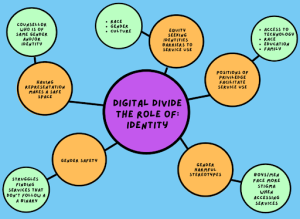
Hello Liz, you did an excellent job connecting the articles and applying them to real-world examples. I agree that digital literacy and access are now basic health necessities, and your comparison to the shift from cash to cards make that point very clear. Your reflection on digital exclusion as a form of social exclusion is insightful and highlights the deeper human rights implications. Overall, your analysis ties the frameworks together effectively and shows strong understanding of social justice aspects of the digital divide.
I totally agree with you. Without access to the internet people are going to get left behind and it will be detrimental to their health. Your comparison to no cash or checks is interesting because that has become even more prominent since Covid and working in the service industry I do still see some push back. People want to be able to continue doing things the way they always have and use cash at the bar. However those same people are not the ones who don’t have access to a debit card. I think these articles really opened my eyes to how many people could be left behind and not because they don’t want to be connected. The digital exclusion is purposeful and another way to create class divides.