

What I Thought AI Was… and What I Learned
Have you ever stopped to think about how AI actually works? I know I hadn’t. Before reading Kalota’s Primer, I simply saw AI as a helpful tool that corrected mistakes, organized my ideas, and improved the structure of my work. I thought of AI almost like a college tutor that could explain difficult concepts in a way that made more sense to me. But after reading this article, I realized there is much more happening behind the scenes than I ever imagined.
Based on what Kalota’s Primer explained about generative AI being trained on huge amounts of text, learning patterns in language, and predicting what words are most likely to come next, I was honestly a little puzzled. Like many people, I assumed AI searched for the correct answer much like Google. Have you ever thought that too? I never questioned how AI generated its responses because I was more focused on whether the information seemed helpful. Learning that AI predicts language patterns instead of actually understanding information completely changed my perspective. It made me wonder, if AI isn’t truly “thinking,” then how often do we trust its responses without questioning them?
I have mostly used AI for school because it allows me to receive information more quickly and better understand complex topics. Whether I am using Google Gemini or ChatGPT, I find these tools helpful for breaking down information into terms that are easier for me to understand. I also enjoy exploring new technology because I like learning how different tools can become useful in everyday life. Before reading Kalota’s Primer, I mainly focused on the answers AI gave me rather than how those answers were created. Now I realize it is important to think critically and verify the information instead of accepting it simply because it sounds convincing.
So, does understanding how AI works make me more or less comfortable with it being used in social work? Surprisingly, it makes me more comfortable, but only when it is used responsibly. I believe AI can help organize information, proofread documents, improve writing, assist with scheduling, and support administrative tasks. However, I do not believe it should replace the critical thinking, ethical judgment, empathy, or professional decision-making that social workers provide. After all, can technology truly understand someone’s lived experiences, emotions, or the complexities of their life? I don’t believe it can.
If someone asked me why AI sometimes gives wrong answers, or “hallucinates,” I would explain that AI is a form of technology, and like any technology, it is capable of making mistakes. Based on what I learned from Kalota’s Primer, AI does not actually understand whether information is true. Instead, it recognizes patterns from the information it was trained on and predicts what words are most likely to come next. Because it is making predictions instead of verifying facts, it can sometimes provide responses that sound believable but are actually inaccurate. Doesn’t that make you think twice before accepting every AI response as fact?
AI Isn’t Going Anywhere—So What’s Next?
But is avoiding AI really the answer? It’s technology, for goodness’ sake! You can’t avoid it. It’s already part of our everyday lives. We use it on our phones, in our cars, when shopping online, and even inside restaurants. Whether we realize it or not, AI is becoming integrated into the world around us. So instead of asking whether we should avoid AI altogether, maybe the better question is: How can we use it responsibly while protecting the people we serve?
Before AI is implemented in social work settings or agencies, I believe much more research should be conducted. Based on my own personal experience, I originally believed AI was very similar to Google because both provide information when you ask a question. However, after reading Kalota’s Primer and Moore et al., I realized they work differently. While Google searches for information from existing sources, generative AI creates responses by recognizing patterns in language and predicting what words are most likely to come next. Learning this completely changed my perspective on how AI actually works.
Because AI generates responses based on patterns instead of truly understanding the information, there is always the possibility that it can misinterpret a social work concept, medical term, or a client’s situation. If social work practitioners are not careful and do not review AI-generated information, there is a risk that tasks such as intake screenings, waitlist management, psychoeducation, mindfulness exercises, or after-hours support could provide inaccurate or misleading information to clients.
For that reason, I believe there should always be human oversight when AI is used in social work practice. Social workers should review and verify any information generated by AI before it is shared with or used to make decisions about clients. AI can be a helpful resource for improving efficiency, but it should never replace a social worker’s professional judgment, ethical responsibilities, or ability to understand each client’s unique needs. Without proper oversight, there is a possibility that many people could be negatively affected by incorrect or misunderstood information generated by AI.
I believe AI should only be used for supportive tasks such as organizing information, managing schedules, assisting with clerical work, and helping structure documentation or client notes when appropriate. These types of tasks can improve efficiency and help social workers stay organized, allowing them to spend more time focusing on their clients.
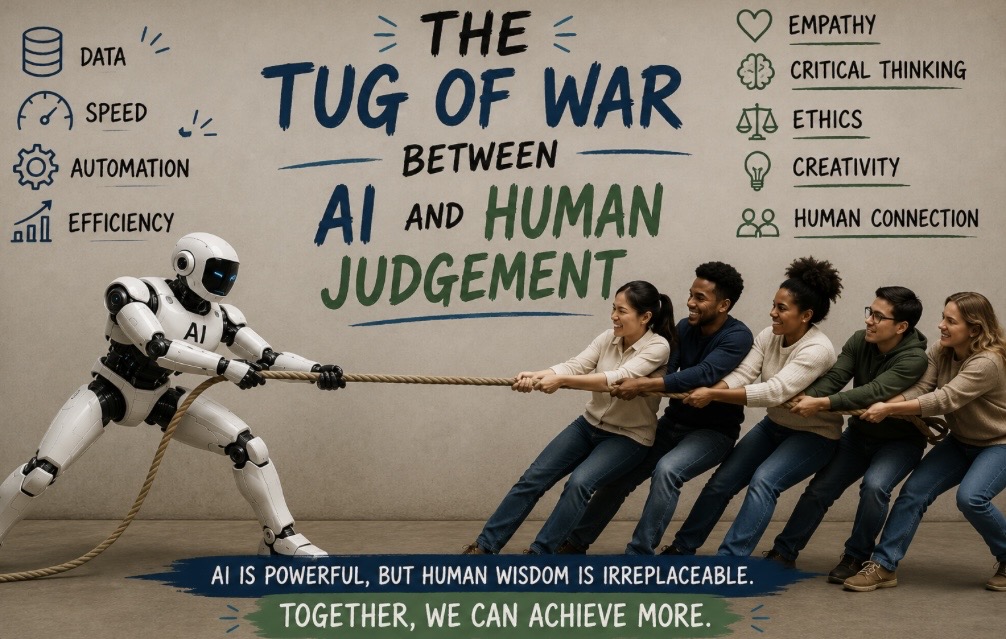
Social work practitioners, however, should always be the minds behind the operation. They should use their professional knowledge, critical thinking, problem-solving skills, and ethical judgment to assess clients’ real-life situations and daily challenges. Social workers should be the ones building relationships with clients, understanding their unique experiences, providing guidance and support, and making decisions that are in the client’s best interest. Moore et al.’s findings strengthened my belief that AI can be a helpful tool, but it should never replace the empathy, human connection, and professional judgment that social workers bring to practice. AI can assist with administrative responsibilities, but decisions that directly affect a client’s well-being should always remain in the hands of a trained social worker.
In my personal life, there have been several times when I had to correct AI because it misunderstood what I was asking or added information that I did not intend. If I had not caught those mistakes, the information could have been misconstrued or misinterpreted. For example, I might ask AI to help me write a friendly message to a close friend. While AI usually does a good job, I have learned that if I am not specific enough with my instructions, it tends to fill in the blanks on its own instead of asking for clarification. Sometimes it changes the tone, adds details that I never mentioned, or misunderstands the meaning of what I wanted to say.
I have also noticed this with simple questions. If I ask AI to define a word like “cordial,” it may provide an explanation that does not fit the context I intended or use wording that changes the meaning. These experiences in my personal life have shown me how important it is to review AI-generated responses instead of assuming they are always accurate.
Because of these experiences, I believe human oversight is essential whenever AI is used in social work practice. If AI can misunderstand something as simple as a message or the meaning of a word, it could also misinterpret important information about a client’s situation. In social work, even a small misunderstanding could affect the services a client receives or how their needs are understood. That is why I believe AI should be used as a support tool while trained social workers remain responsible for reviewing information, making decisions, and ensuring clients receive accurate, ethical, and person-centered care. As AI continues to evolve, I think the real question is not whether we should use it, but whether we are willing to learn enough about it to use it responsibly.
Figure 1: Blog Picture
The Tug of War Between AI and Human Judgment.
Note. AI-generated image created using ChatGPT (OpenAI), July 2026.
Seqouyah,
Your discussion of Kalota was excellent and right on the mark. AI is indeed a tutor – for many of us, including me. But you are right, it is easy for us to assume it provides information like a search engine, when that’s not the case. I think if you look at the two documents I have added to this week’s module, you will get an even greater understanding of how all this works – at least I certainly hope that is the case.
You have done. really good job of pulling out the primary concepts and issues. You are also right on the mark about the questions we have to answer. While everyone agrees there are tasks in which AI can assist social workers, there are services that need human interaction. The questin is how do we find that line, and then how do we set up the appropriate safeguards to maintain it.
Good discussion.
Dr P